Signs of Wood Rot on Your Home's Exterior
How to spot wood rot early on trim, sills, stairs, and soffits — the visual and texture signs New England homeowners should never ignore.
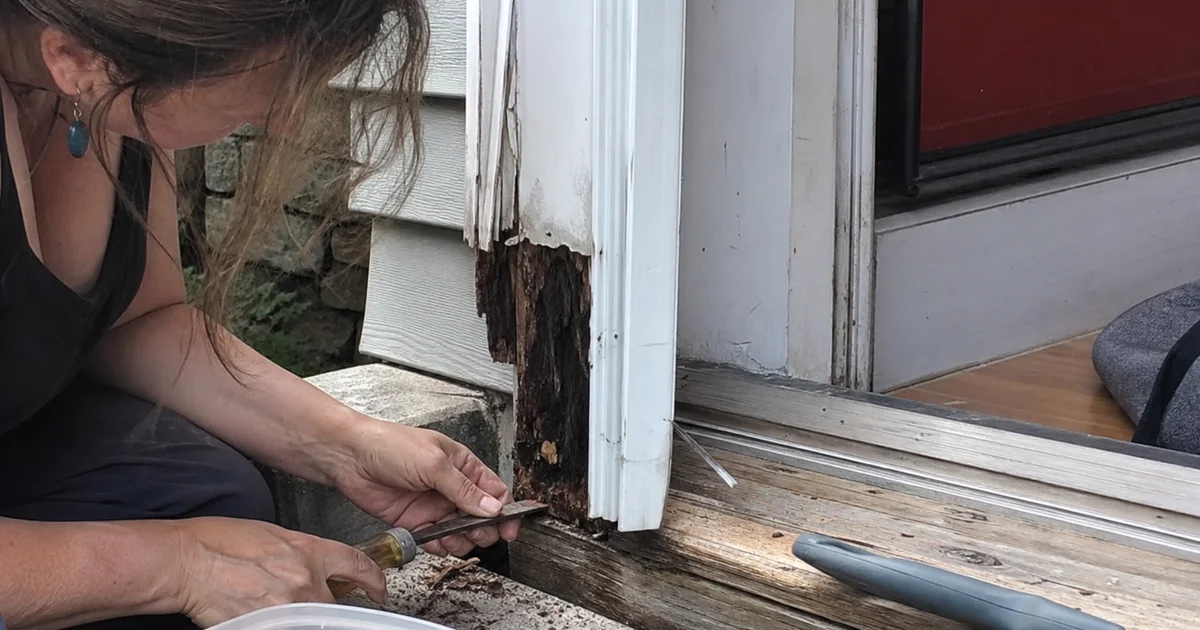
Our Handy Man West Hartford crew regularly encounters Connecticut homeowners frustrated by hidden decay. Identifying the problem early saves a massive amount of money and stress.
We see this exact issue destroy perfectly good window frames and decks every single season.
The signs of wood rot on house exteriors are easy to miss until the damage is severe. Our goal is to break down the specific indicators you should look for right now. Armed with this information, you can determine if you need a quick patch or a full reconstruction.
The visual signs to watch for
We know this fungus shows up gradually and typically masks itself behind peeling paint. Wood rot does not announce itself the way termite damage or a roof leak does.
Our team frequently spots wet rot, which leaves the lumber looking dark and feeling spongy to the touch. Fungi like Serpula lacrymans thrive on moisture and cause brown rot, which makes wood dry out and crack in a distinct checkerboard pattern.
We use the term “Iceberg Effect” because a tiny three-inch blemish on your rotting trim often hides feet of decay inside the wall cavity. Catching these visual precursors early is essential for protecting your property. Our specialists highly recommend watching for these specific early warning signs on your home:
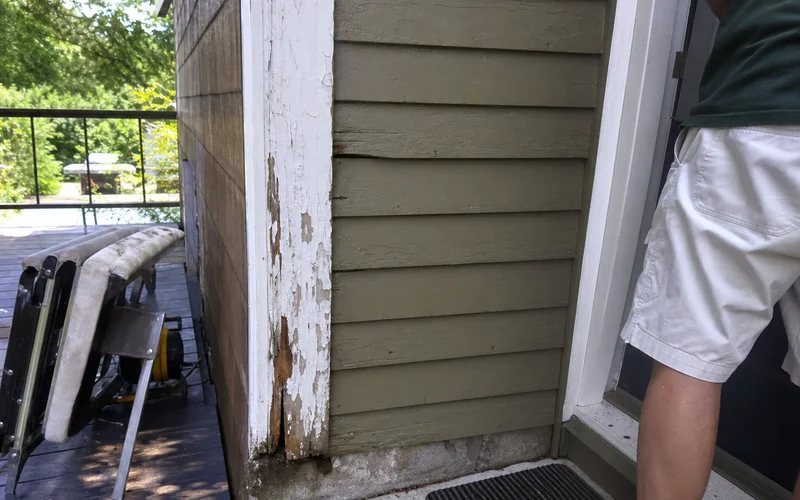
- Bubbling or flaking paint: Moisture trapped underneath pushes the paint away from the surface.
- Perpendicular hairline cracks: The wood fibers are breaking down against their natural grain.
- Separated caulk joints: Failed sealant allows rainwater to pool and soak into the boards.
- Checkerboard cracking: This indicates an advanced fungal infection that requires immediate attention.
If you see our carpentry team called out for one of these warnings, the problem is usually contained. We can step in before the decay reaches your structural framing. Upgrading a vulnerable wood fascia board to rot-proof PVC trim costs a bit more upfront but completely eliminates this recurring headache.
The screwdriver test
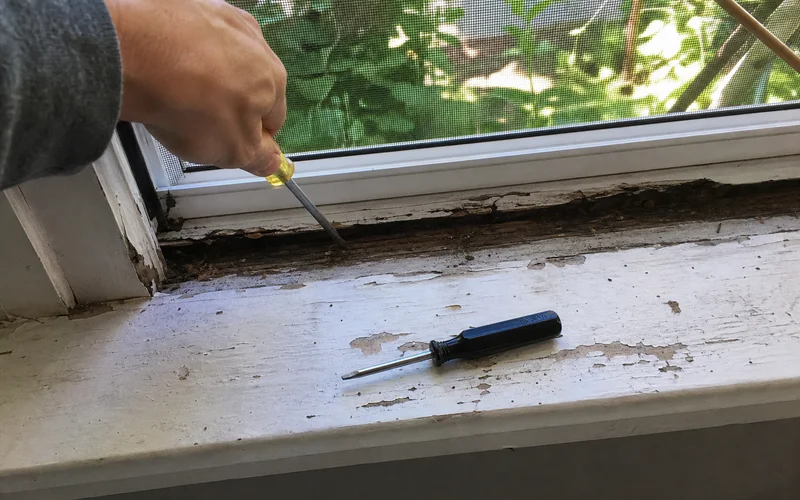
We consider the screwdriver test to be the most reliable homeowner check, requiring only a standard flathead or a sharp metal awl. Scraping away a small bit of the bubbling paint first gives you direct access to test the raw fibers. Our crews advise pressing the tip directly into any suspicious area with moderate hand pressure.
Healthy wood pushes back firmly, and the metal tip will barely dent the surface. We find that rotted wood gives way instantly, often letting the tool sink half an inch or more with almost no effort. Knowing how to spot wood rot accurately helps you avoid unsafe conditions on balconies and porches.
Our contractors use the 1/4-inch rule to determine the true severity of the damage. If your metal probe sinks more than 1/4 inch into a critical area like a deck ledger, you are looking at a structural failure rather than a cosmetic flaw. We view this as a mandatory five-second assessment that answers the replacement question definitively. This quick check is especially crucial for the most vulnerable areas of your exterior.
The five spots most likely to rot first
Bottom of exterior door frames · Window sills · Stair stringers where they meet concrete · Deck ledger boards · Roof soffits under valleys. If you have rot anywhere, it started at one of these.
New England moisture and freeze-thaw
We see the devastating effects of the repeated freeze-thaw cycle year after year. Connecticut homes face unique risks because our regional climate combines wet fall seasons with punishing winter weather. Our local weather data shows this freezing and thawing pattern can repeat 20 to 40 times in a single winter. Water finds a microscopic joint, freezes solid, and expands the gap slightly.
We know that capillary action makes this process even worse. When the ice thaws on a sunny afternoon, that capillary effect literally sucks the melted water deep into the newly expanded wood grain. Our carpenters frequently find that missing or improperly installed metal Z-flashing above ledger boards accelerates this exact type of decay. Eventually, even a perfectly caulked seal will break down and let moisture seep into the vulnerable boards behind it.
We can guarantee that a damp New England November provides the perfect environment for fungi to thrive. The fungus responsible for the destruction requires only three things to survive, which are moisture, oxygen, and a food source like lumber. We created a quick breakdown to help you identify the two most common threats you might encounter:
| Rot Type | Primary Cause | Visual Characteristics | Texture |
|---|---|---|---|
| Wet Rot | Constant exposure to pooling water or leaky gutters. | Dark discoloration, localized to the moisture source. | Soft, spongy, and easily indented. |
| Brown (Dry) Rot | Fungal spores (Serpula lacrymans) in damp, poorly ventilated areas. | Sunken appearance with deep, checkerboard-style cracking. | Brittle, dry, and crumbles into powder. |
When to act
Acting before the next season arrives is critical if you find soft spots on any exterior sill, stair, or soffit. We strongly encourage addressing these issues before spring rains accelerate the fungal growth. Small, localized repairs usually involve spot-filling the decay, swapping out a trim board, and resealing the joints. Our 2026 pricing data shows exactly how fast these costs escalate in the Connecticut area:
- Minor Surface Repairs ($500 - $1,500): Quick fixes for window sills, basic exterior trim, and small cosmetic spots.
- Moderate Interventions ($2,000 - $5,000): Replacing larger sections of siding, door frames, or localized deck boards.
- Severe Structural Rebuilds ($5,000 - $10,000+): Major work involving load-bearing joists, subfloors, and roof-edge framing.
Leaving a small damaged spot exposed for another harsh winter allows the fungi to invade your load-bearing framing. We regularly see neglected surface issues turn into those massive structural rebuilds.
Professional restoration requires entirely different materials than a quick cosmetic patch. We rely on deep-penetrating commercial epoxies, such as Abatron LiquidWood, to permanently solidify the failing fibers. Standard hardware store options like Minwax High Performance Wood Hardener work fine for tiny visual fixes, but they lack the structural strength needed for deck ledgers.
We want you to make the most cost-effective decision for your property. If you are unsure whether your specific situation is repairable or demands a complete overhaul, see our guide on wood rot repair vs. replacement.
We highly recommend grabbing a screwdriver this weekend and walking the perimeter of your property. Spotting the signs of wood rot on house trim early is the single best way to protect your investment.
Our team is always here to help if you discover a soft spot that worries you.
A quick five-minute inspection can save you thousands of dollars in emergency structural repairs. We are ready to step in whenever you need us. Reach out to schedule a thorough assessment and get your exterior secured before the next storm hits.