Custom Shelving and Built-Ins: What to Know Before You Build
Planning custom shelving or built-ins? Material and finish options, wall-anchoring, timeline, and what a professional evaluation covers before you build.
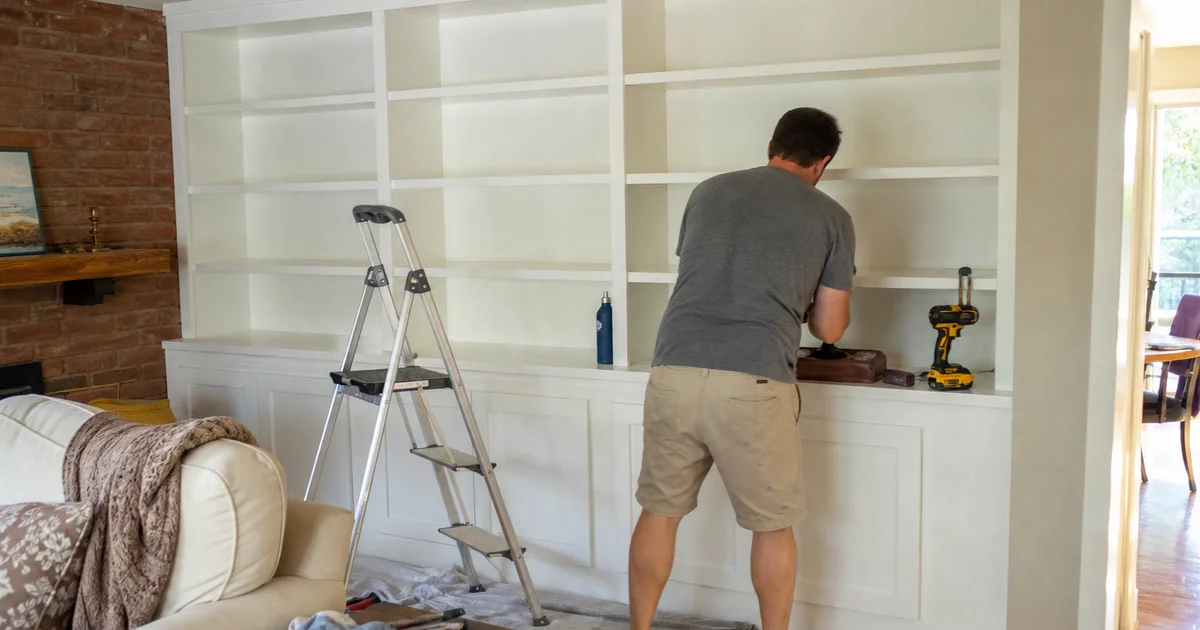
We consistently see that standard off-the-shelf units rarely solve the actual storage problems in a busy home.
Store-bought bookcases usually waste valuable vertical space. Flimsy boards also lack the strength to hold heavy collections.
Our approach focuses on building a professional custom shelving installation that lasts a lifetime. A successful project requires addressing three main factors:
- Material selection
- Structural anchoring
- Realistic timelines
Proper execution ensures your family stays safe.
We manage every step through our comprehensive custom carpentry service. The data will show you exactly what to expect regarding costs and timelines. These facts make the planning process much easier.
Material and finish choices for custom shelving installation
We always start every custom built-ins job by helping you select the right wood. Your material decision drives the total cost, the timeline, and the final look of the piece. According to 2026 data from HomeGuide, the national average cost for custom built-in shelves runs between $2,000 and $7,500 based on these exact choices.
Our carpenters frequently recommend paint-grade options like primed pine, poplar, or Medium Density Fiberboard. These materials remain highly stable. They are forgiving to work with and take paint beautifully.
We strongly advise against using hard maple for painted cabinets. This specific wood expands and contracts significantly with seasonal humidity changes. Those shifts will eventually crack the paint along the joints.
Popular Wood Choices
| Material Type | Best Application | Key Benefit |
|---|---|---|
| MDF or Poplar | Painted finishes | Resists moisture and paint cracking |
| Hickory | Natural or stained | Extremely durable for heavy traffic |
| White Oak | Premium stained looks | Beautiful grain and high stability |
Our standard practice involves using soft maple or MDF because they resist moisture fluctuations much better. Stain-grade options like white oak, cherry, or walnut will beautifully display the natural wood grain. These premium choices cost more in both material and labor.
We must use highly precise joinery for stain-grade wood because gaps cannot be hidden with caulk. Hickory stands out as the most durable domestic option for high-traffic areas. It boasts an impressive 1,820 rating on the standard Janka hardness scale.
Our most popular request remains the classic white painted built-in. Light finishes easily brighten a room. They perfectly suit colonial and mid-century architecture styles.
Wall anchoring and load capacity
We see amateur installs fail most often due to improper anchoring. A standard bookshelf loaded with books carries 20 to 40 pounds per linear foot. A full 8-foot section easily weighs 300 pounds.
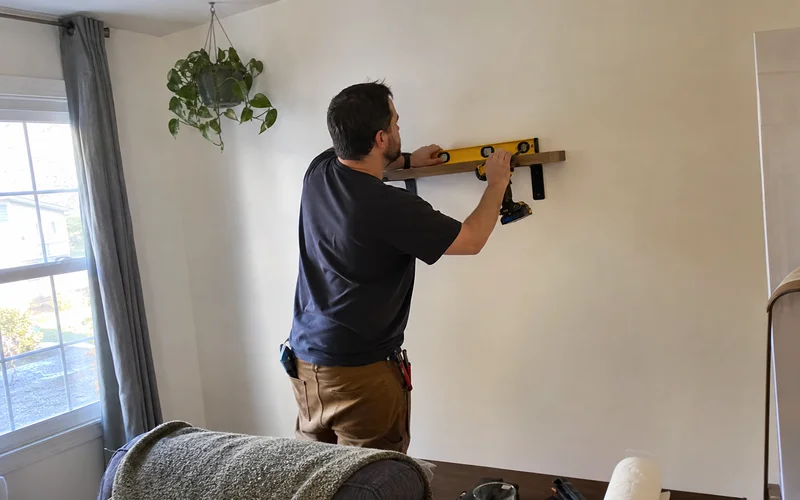
Our installers locate studs with precision tools to ensure maximum stability. If the unit is not attached properly to structural studs or masonry anchors, it will eventually collapse. Safety is the primary reason to hire professionals.
We rely on heavy-duty French cleats or 3-inch structural screws to secure large loads. Industry measurements confirm standard US shelf depths usually measure 10 to 12 inches to accommodate most hardcovers. Tests by This Old House contractors show a standard 3-foot section of 1-by-12 inch MDF will start sagging at just 87 pounds.
The three-anchor rule
Any shelving unit or built-in over 30 inches tall gets three anchor points on the top rail minimum: two on the outside stud bays and one wherever a stud lands in the middle. Fewer than three and cyclical loading (adding and removing books) eventually works fasteners loose.
Our team prevents this bowing by using 3/4-inch thick boards and installing vertical dividers for longer spans. Storage industry data confirms steel brackets rated for 50 pounds provide essential reinforcement. Fasteners will work loose over time without this extra support.
We always implement strict structural guidelines for heavy loads. These three practices guarantee long-term stability:
- Upgrade thickness: Use 3/4-inch material minimum.
- Add middle supports: Break up spans longer than 36 inches.
- Hit the studs: Fasten into framing every 16 to 24 inches.
Those steps prevent dangerous accidents.
Timeline and what a professional evaluation covers
We conduct a thorough on-site evaluation before ordering any materials. Estimates from HowLongFor show a simple freestanding bookcase might take an enthusiastic amateur four to eight hours to assemble. The same data reveals a permanent custom built-in wall unit typically requires 16 to 32 labor hours to complete.
| Phase | Duration |
|---|---|
| On-site evaluation | 30-45 min |
| Materials ordering | 2-5 business days |
| Build & install | 1-2 days |
| Paint touch-up (if included) | 1 additional day |
Our written flat-rate quote arrives shortly after the initial visit. The consultation covers measuring the alcove to the eighth-inch. Checking for out-of-plumb walls is critical because older homes are rarely perfectly straight.
We locate all hidden studs and confirm any electrical outlets or vents. The design must accommodate these utilities easily. Building during a dry season helps the wood acclimate properly.
Our finishing guide on interior trim and crown molding installation covers the rest of the visual details. You can confidently plan your upcoming remodeling project with these facts in mind. Proper planning makes the entire process stress-free.
Planning your custom shelving installation
We want your upcoming project to go as smoothly as possible.
Gathering some inspiration photos is a great first step. Clearing the installation area will speed up the initial evaluation.
Our team is ready to answer any specific questions you have about your space. Reach out today to schedule your consultation for a custom shelving installation. Your beautifully organized home is just a phone call away.