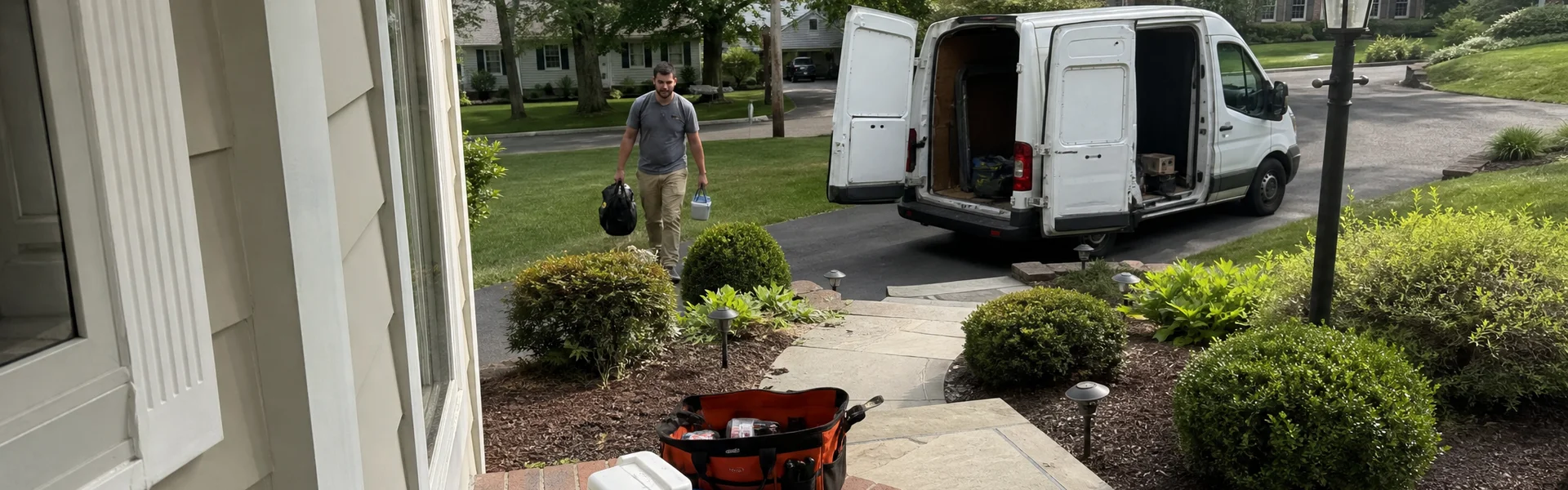
Why Power Washing Matters for CT Siding and Decks
Power washing removes mold, algae, and dirt from Connecticut siding and decks, protects surfaces, and preps wood for staining. Here's when and why.
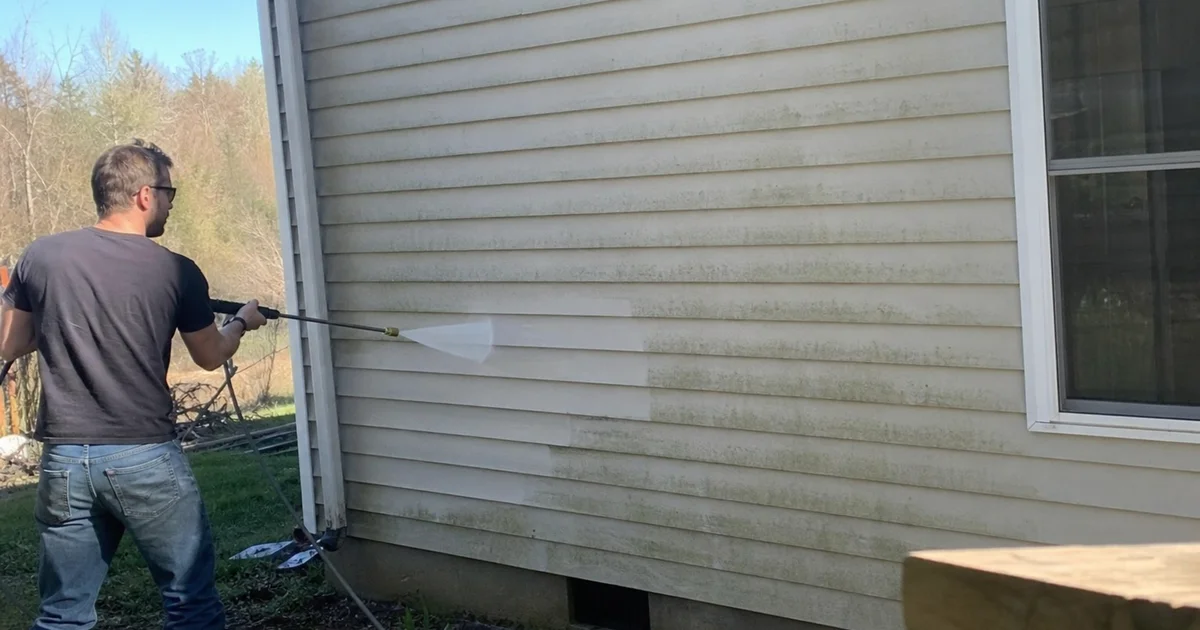
We see it every spring across Connecticut.
You know how quickly a beautiful home can lose its charm when winter weather leaves a heavy layer of grime behind. A simple exterior cleaning provides immediate power washing benefits that completely transform your property.
It is a smart move.
Our team at Handy Man West Hartford understands that busy homeowners need reliable ways to protect their investments. Let’s look at the data, what it is actually telling us, and then explore a few practical ways to respond to exterior maintenance.
What power washing actually does: Understanding power washing benefits
Power washing uses high-pressure water, typically between 1,500 and 4,000 PSI, to blast away mold, algae, dirt, and pollen from your home’s exterior. This specialized cleaning process physically removes harmful biological growth before it can permanently degrade your materials. Power washing siding regularly is the best defense against this damage.
Our local climate in Connecticut creates the perfect breeding ground for organic buildup. High humidity in the summer and wet fall leaves provide constant moisture for mildew to thrive.
Untreated algae growth produces acids that slowly eat away at paint and wood fibers, making routine removal essential for structural integrity.
Recent 2026 data from the National Association of Realtors highlights the financial impact of this maintenance. Their reports show that 97% of buyers prioritize curb appeal, and a professionally cleaned exterior can increase a home’s resale value by up to $10,000.
We recommend addressing this growth promptly to protect your financial investment. Combining tasks saves time for busy property owners. Our power washing service is often booked alongside gutter cleaning in the fall or spring so one visit handles both tasks. This efficiency keeps your home looking great without disrupting your schedule.
Surface types and appropriate settings
Different building materials require specific water pressures and nozzle techniques to clean effectively without causing damage. Applying the correct PSI setting ensures you remove dirt safely while protecting the structural integrity of the surface.
Our technicians know that using the wrong technique can lead to thousands of dollars in water damage or splintered wood. For example, applying too much pressure to vinyl lap siding can force water up into the wall cavity and cause hidden mold problems. You need a calibrated approach for every single material.
Soft washing is often a better choice than high-pressure blasting for delicate areas. This method uses a lower pressure setting combined with specialized cleaning solutions like sodium hypochlorite to safely dissolve algae on painted wood. We use this targeted strategy to protect your home’s exterior coatings from premature wear. Refer to the table below for the safest pressure ranges.
| Surface | Pressure setting | Notes |
|---|---|---|
| Vinyl siding | 1,500-2,500 PSI, wide fan | Never straight-on; angle down to avoid water intrusion |
| Wood siding (painted) | 1,200-1,800 PSI | Softest setting; check for lifting paint |
| Wood siding (stained) | 1,500-2,500 PSI | Prep for restain if planned |
| Cedar shingles | 1,000-1,500 PSI | Very gentle; risk of splintering |
| Composite decking | 1,500-2,500 PSI | With fan tip 12+ inches from surface |
| Wood decking | 1,500-2,500 PSI | Along the grain, never against |
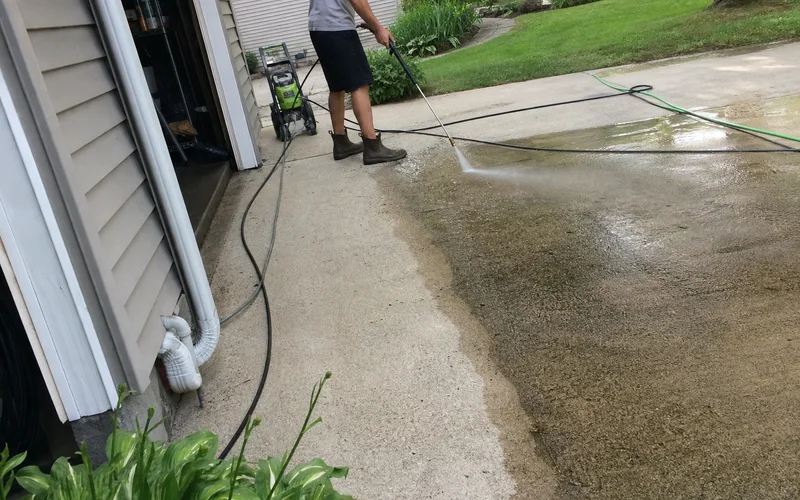
| Concrete driveway | 3,000-4,000 PSI | Highest pressure; concrete tolerates aggressive cleaning |
| Concrete walkway | 2,500-3,500 PSI | Watch for spalling on older concrete |
We rely on these specific settings to deliver a thorough clean without risking property damage. Using a pressure washer below these recommended ranges usually accomplishes nothing at all.
Deck prep for staining
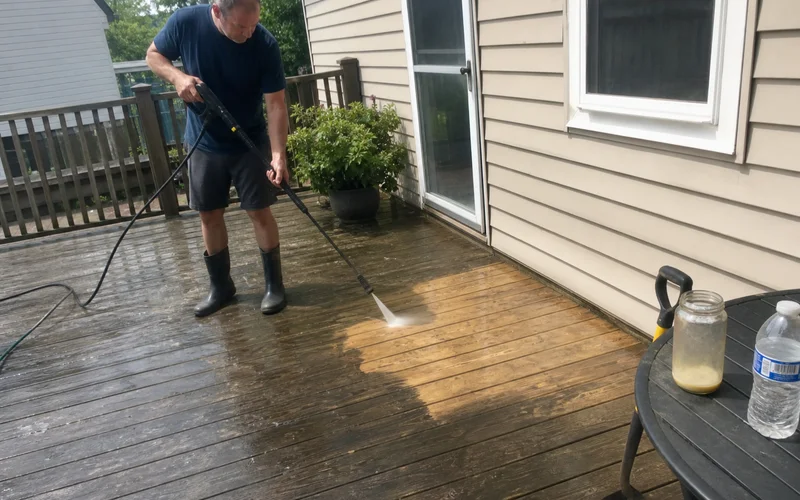
The single biggest reason a fresh deck stain fails within a year is inadequate surface preparation. Power washing at the correct pressure opens the wood grain, removes old debris, and creates a clean canvas for the new stain to bond effectively.
Our deck restoration process always begins with a thorough washing to clear out clogged wood fibers. Stain needs to penetrate deeply into the wood to work properly, and a dirty surface blocks that absorption completely. Leading stain manufacturers like Cabot and Benjamin Moore explicitly require this cleaning step for their product warranties to remain valid. Moisture content is another critical factor that homeowners often overlook. Wood must have a moisture content of 15% or less before you apply any sealer.
We strongly advise waiting at least 48 hours after washing or a heavy rainstorm before you begin to stain. Applying a coating to wet wood traps the moisture inside and leads directly to peeling, flaking, and rapid wood rot. The sequence for proper deck refinishing is non-negotiable:
- Power wash (with a deck cleaner solution like sodium percarbonate if heavily weathered)
- Let dry 48+ hours to reach appropriate moisture content
- Sand any raised grain lightly
- Apply stain or sealer
We have seen countless DIY projects fail within 12 to 18 months simply because the owner skipped the initial washing step. Taking the time to prep the wood correctly guarantees a beautiful finish that lasts for years.
When to book power washing
Knowing when to power wash house exteriors maximizes the benefits of the service. Scheduling your wash during specific seasons helps you stay ahead of Connecticut’s harsh weather cycles and heavy pollen drops.
Our experience shows that proactive cleaning prevents stains from setting into your siding permanently. Connecticut experiences an intense spring allergy season, with birch and oak pollen peaking heavily in April and May. This sticky pollen coats exterior surfaces and creates a food source for algae if it is not washed away. Here are the best times to schedule a cleaning:
- Spring (April-May): Remove winter mildew and wash away heavy birch and oak pollen before summer growth accelerates.
- Summer (July-August): Target localized mold spots that develop in high-humidity, shaded areas of your property.
- Fall (September-October): Prep decks for the freezing winter months and clean off lingering summer dirt.
- Before painting or staining: Always prep the surface before sealing, as pressure washing deck surfaces ensures proper stain adhesion.
We always suggest grouping seasonal chores together to save money. If you are planning a fall gutter clean anyway, bundling power washing into the same visit saves the trip cost. For deeper deck maintenance context, see our maintain wood deck through Connecticut winters guide. Keeping your property clean year-round protects its value and ensures it always looks its best. Scheduling your service today is the best next step to secure these power washing benefits for your own home.