How to Maintain a Wood Deck Through Connecticut Winters
Fall sealing, snow and ice care, and a spring checklist to protect your Connecticut wood deck through freeze-thaw winters and extend its life.
Our crews at Handy Man West Hartford see the same seasonal damage across the region every spring.
You know how quickly a small crack turns into a rotten board after a long freeze-thaw cycle. The harsh northeast climate means handling your deck maintenance winter checklist early is essential for your backyard investment.
We are going to break down the most effective sealing techniques, outline proper snow clearing methods, and walk through a fast spring inspection routine. These straightforward steps will save you significant time and money.
Fall sealing is the single most valuable maintenance step
We consider fall sealing the most critical step to winterize wood deck structures in our region. A properly cleaned and sealed surface sheds water instead of absorbing it, stopping freeze-thaw cycles from driving moisture into the grain to cause rot. This proactive measure extends the lifespan of your property significantly.
Optimal Sealing Conditions
Our schedule for deck sealing Connecticut properties fills up fast before the heavy autumn rains begin. Timing this project correctly prevents complete coating failure. The optimal window in West Hartford is late September through mid-October, avoiding the summer heat but finishing before the area’s average first frost date around October 20th.
We always monitor the thermometer closely because wood surface temperatures must stay between 50 and 90 degrees Fahrenheit for proper curing. You should wait for a dry window of at least 48 hours. Penetrating oil sealers like Armstrong-Clark, TWP 1500, or CUTEK Extreme soak deeply into the fibers instead of forming a surface film that can peel.
The right sequence guarantees the sealer bonds effectively:
- Power wash or hand-clean: Use a specialized cleaner and a stiff brush to remove embedded dirt.
- Allow maximum drying time: Wait 48 hours minimum for the moisture to evaporate completely.
- Perform minor repairs: Secure loose fasteners and replace any splintered boards.
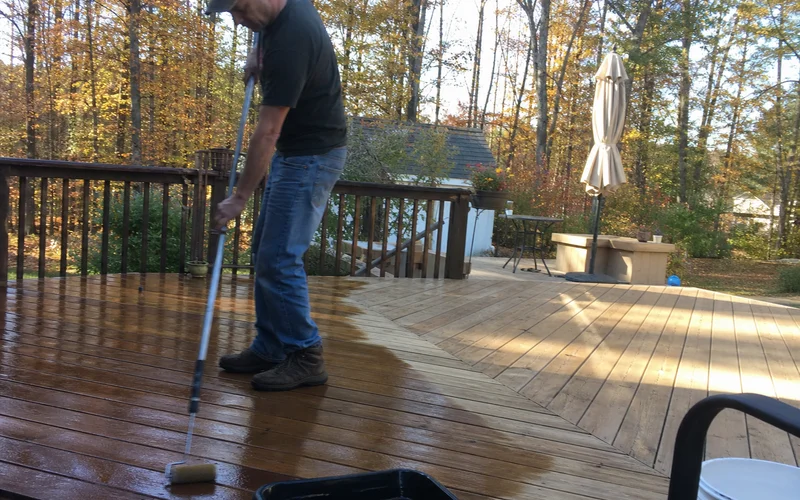
- Apply a penetrating sealer: Use a roller and back-brush to work the product deep into the grain.
Our deck maintenance service handles the full preparation and application sequence, including any small board or fastener repairs found during cleaning. One coat is standard for most areas. A second coat on heavily exposed sections like railings and stair treads is worth the extra time.
Snow and ice management
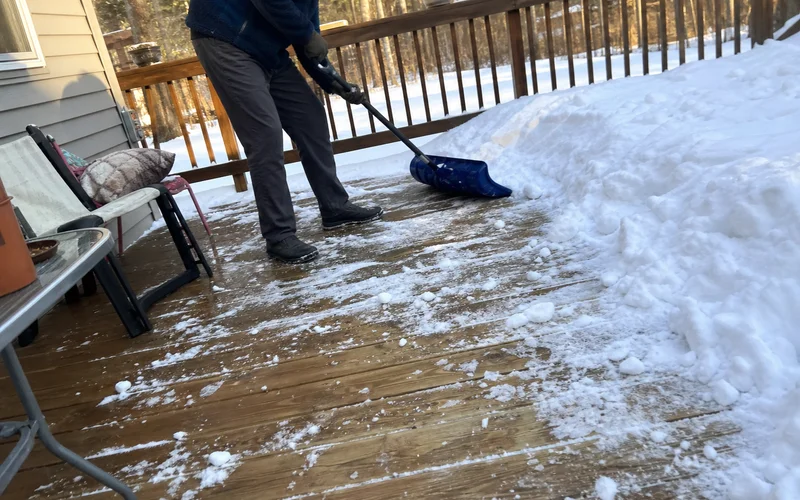
We focus on keeping snow loads reasonable and avoiding board damage while clearing during the cold months. Standard 2x6 pressure-treated decking easily handles typical snow loads, but clearing a path prevents heavy ice buildup at the door after 18 inches of accumulation. The right approach will effectively protect deck from snow accumulation without ruining the finish.
Our team advises against using any metal shovels or polycarbonate blades with straight edges. Polycarbonate plastics become sharp after scraping on concrete and will scratch your wood. You need a soft polyethylene plastic shovel instead.
A specialized tool like the US SHOVEL Crack Jumper features skid shoes that glide over the gaps between boards safely. These best practices ensure safe and effective clearing:
- Use a polyethylene shovel: Metal edges gouge softwood and expose fresh grain to moisture.
- Push with the grain: Moving parallel to the boards prevents catching and splintering the edges.
- Clear before the freeze: Melted and refrozen snow builds ice sheets that are harder to remove and hold moisture against the surface longer.
- Apply safe ice melt: Skip rock salt (sodium chloride) completely because it corrodes screws and stresses wood fibers.
We strongly suggest using Calcium Magnesium Acetate (CMA) for any necessary traction. CMA is effective down to 15 degrees Fahrenheit and remains the safest chemical option for both your decking material and nearby landscaping. Magnesium chloride is another viable alternative, but it can be harsh on pet paws.
Ice dams on deck ledgers
If your deck ledger is under a roof edge, watch for ice building up where the roof meets the deck. That ice traps moisture right at the ledger connection, the single most critical structural point on a deck. Clear it if you can safely reach.
Spring inspection checklist
We make early spring walks a priority to check for the damaging effects of freeze-thaw cycles. Finding and addressing small problems immediately prevents expensive structural failures later in the summer.
Moisture expands inside the wood during the winter, pushing fasteners out and creating new vulnerabilities. You should pay close attention to the structural connection points. Galvanized or copper flashing must remain perfectly sealed against the house wall to keep water out.
Look for these specific warning signs during your initial walkthrough:
- Any new soft spots or springy boards underfoot.
- Loose or backed-out fasteners pushed up by expanding ice.
- Splits or wide cracks in the board ends.
- Wobbly railings or unstable stair posts.
- Damage to the metal ledger flashing at the house wall.
- Peeling stain, leftover residue, or noticeable moisture absorption.
We recommend washing away residual winter dirt and ice melt with a specialized cleaner. A product like Cutek Wood Reviver or a simple sodium percarbonate oxygen bleach works far better than harsh chlorine bleach.
If you find soft boards or joist damage, our guide on deck board and joist rot covers what repairs look like. A targeted spring visit to repair, clean, and re-seal sets the structure up perfectly for another season.
We know that staying ahead of winter weather requires a proactive approach.
Handling your deck maintenance winter checklist early directly protects your home’s value. Our service team is ready to tackle the heavy lifting for you.
Call us today to schedule an assessment and secure your spot before the snow flies.