Repair vs. Rebuild: Is Your Deck Worth Saving?
When is a deck repairable and when is a rebuild smarter? Structural condition, cost comparison, permits, and age/material factors for CT decks.
You know how quickly a New England winter can age outdoor wood structures.
Deciding between a deck repair vs replacement often comes down to balancing safety with your budget.
We constantly evaluate these structures for local homeowners, and that 15-year mark is usually when the tough choices begin.
Let’s look at the exact factors that drive this decision and walk through how to choose the most cost-effective path.
The four factors that push toward rebuild
Homeowners frequently ask if their deck is worth saving. A structure is usually worth keeping if the ledger board, framing, and footings remain structurally sound. We look at these four specific components to determine if a simple repair will suffice or if a full rebuild is necessary.
Here is exactly what drives the decision:
- Ledger condition: The connection to your house is the single most expensive and safety-critical fix. Flashing failures here cause major water damage. A rotting ledger alone often justifies a complete rebuild. We always verify the presence of modern self-adhering rubber flashing tape, like Trex Protect. The 2024 International Residential Code (IRC) R507.9 updates specifically emphasize these secure attachments. This strict code prevents lateral collapses.
- Framing integrity: The joists, posts, and beams carry the entire load. Sistering joists makes sense for minor rot. Repairing more than 40% of the structure wastes money. We typically see traditional pressure-treated wood frames in Connecticut last 15 to 25 years before moisture damage becomes irreversible. Replacing a few boards on a dying frame just delays the inevitable.
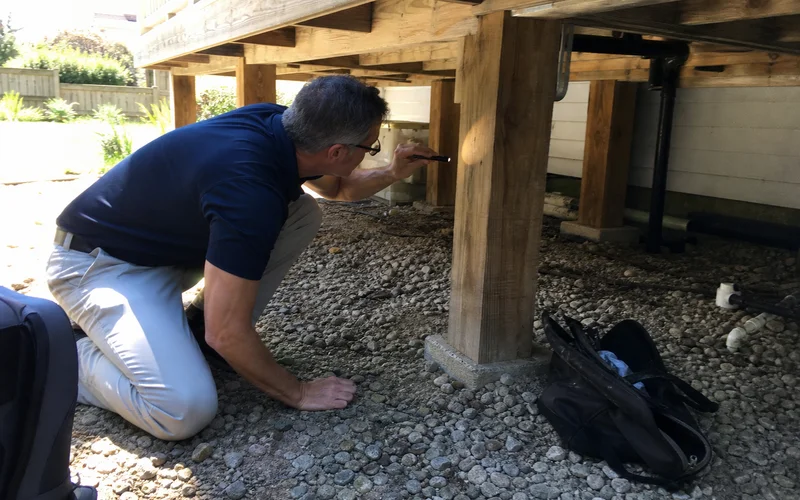
- Footings: Concrete piers must support the weight without shifting. Connecticut state building codes strictly mandate footings reach a 42-inch frost depth. This prevents dangerous winter heaving. Our crews frequently encounter older, shallow piers that have cracked or sunk below grade. You cannot easily fix these inadequate supports without pulling down the whole deck.
- Age and code: Building standards update regularly to improve household safety. A 25-year-old structure rarely meets current requirements. These old frames often fail modern structural load limits. We highly recommend a rebuild if your current guardrails allow a 4-inch sphere to pass through the balusters. This gap is a major safety violation today. Starting fresh automatically guarantees full compliance and peace of mind.
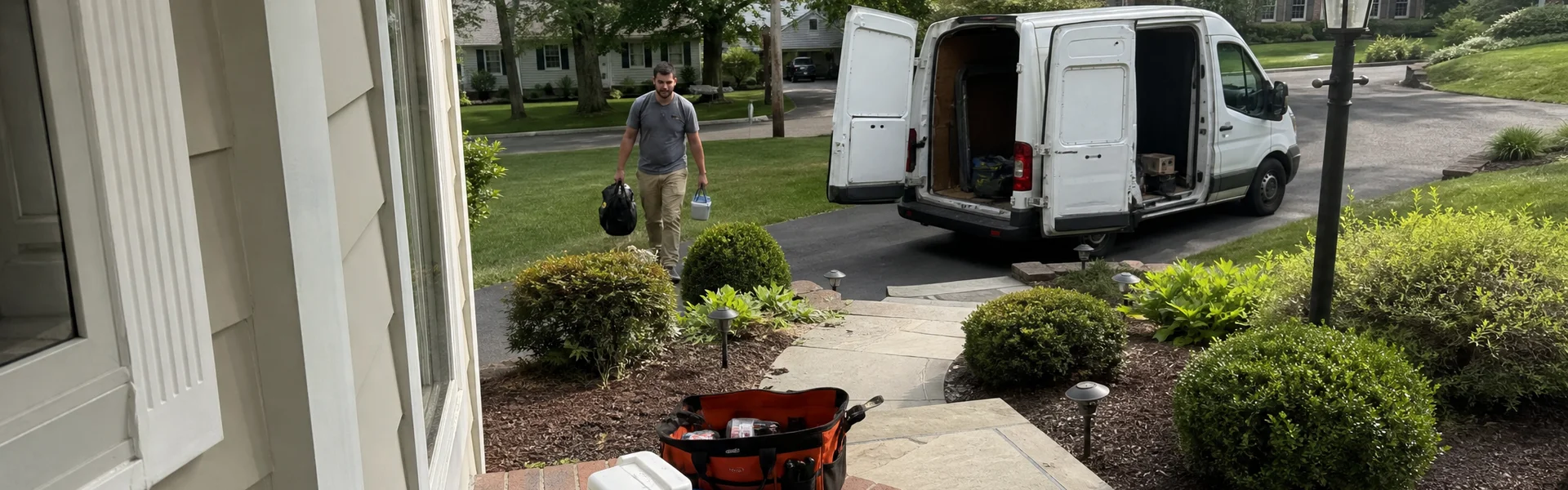
Our deck repair and rebuild service can walk your property and provide clear pricing for both paths. The goal is to give you all the facts before you spend a dime.
Cost comparison
Repairing a structure usually costs between $500 and $6,000. A full deck rebuild cost ranges from $8,000 to $30,000 depending on the materials. We find that the math strongly favors a complete rebuild when repair estimates approach 40% to 50% of the replacement cost.
These very rough Connecticut numbers reflect standard 12x16 backyard layouts:
| Scope | Typical range |
|---|---|
| Targeted repair (boards + fasteners) | $500 to $2,000 |
| Structural repair (sister joists, re-flash ledger) | $2,000 to $5,000 |
| Board replacement + refinish | $3,000 to $6,000 |
| Full rebuild (PT frame + PT boards) | $8,000 to $18,000 |
| Full rebuild (PT frame + composite boards) | $12,000 to $30,000 |
Investing in a new structure offers a surprisingly strong financial return. We regularly reference the 2025 Cost vs. Value Report from Zonda and Remodeling Magazine to track these trends. A brand-new wood deck addition currently recoups an impressive 95% of its job cost at resale nationally.
Upgrading to composite decking recovers nearly 89% of the initial cost. This upgrade also eliminates annual staining chores. We always advise clients to consider this long-term value before pouring thousands into an aging, high-maintenance frame.
When repair is genuinely the right call
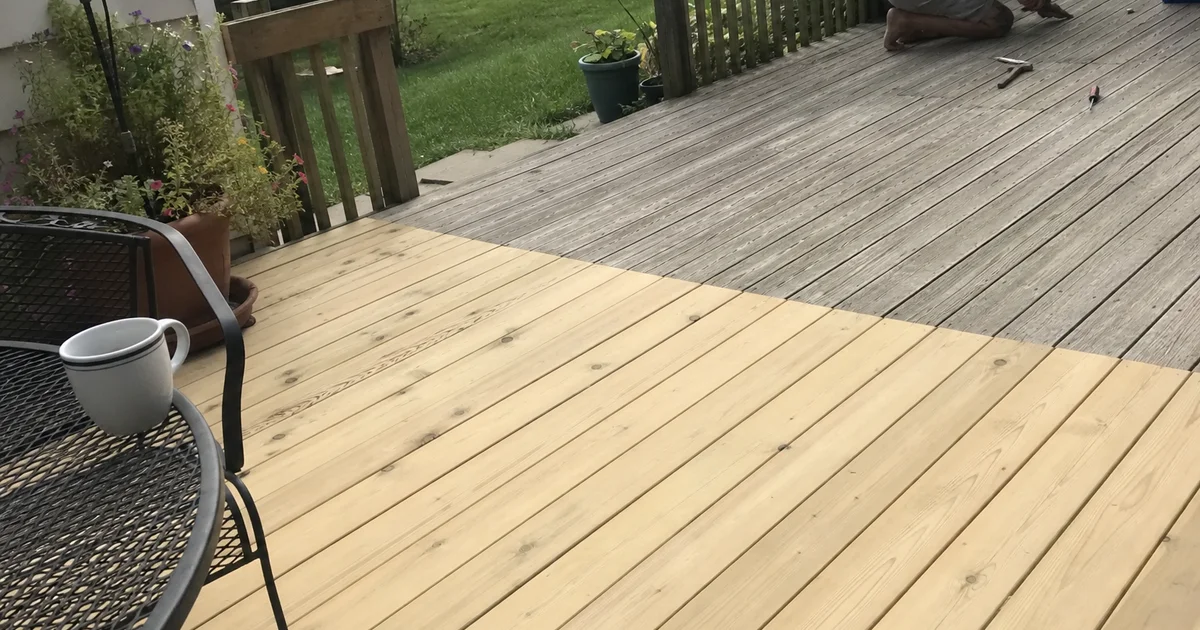
When deciding whether to repair or rebuild a deck, targeted repair is often the smartest choice. Your ledger board must be solid, footings stable, and at least 80% of the framing structurally sound. We can extend the life of these healthy decks by 10 to 15 years for a fraction of the rebuild price.
Board replacement and fresh stain will completely transform the cosmetic appeal of your outdoor space. A combination of strategic upgrades will easily turn a tired-looking deck into something safe and attractive:
- Apply butyl joist tape: Our team highly recommends installing tape like Trex Protect over the existing framing. You do this right before laying down new boards. This simple insider trick prevents standing water from rotting the top of the joists.
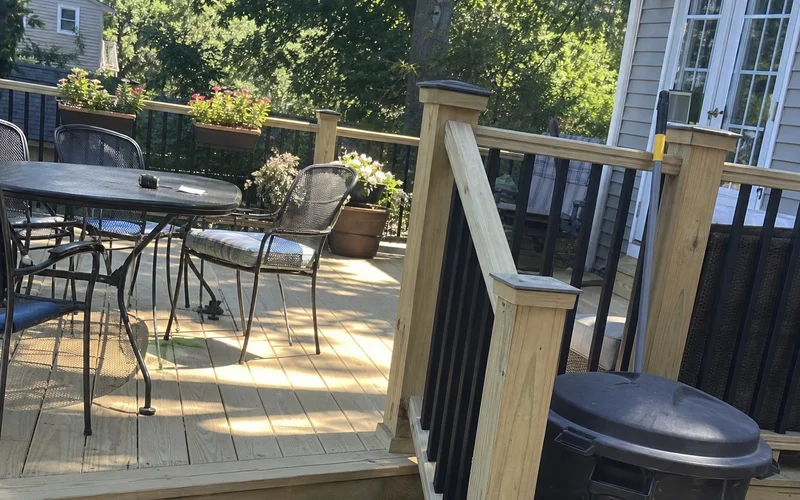
- Upgrade to modern railings: Swapping old wooden balusters for modern aluminum railing systems is a highly effective safety enhancement. It completely modernizes the visual appeal.
- Replace high-wear boards: Swapping out warped surface boards while keeping the sound frame saves thousands in material costs.
We always evaluate these repair options first to save you money wherever possible.
The permit conversation
You generally need a permit for any structural changes or a full rebuild. A permit is also required if the deck sits more than 30 inches above the surrounding grade. We handle this entire paperwork process to ensure your project meets every local regulation.
Connecticut towns like West Hartford, Avon, and Farmington strictly enforce the 2022 State Building Code. They require permits for anything beyond basic cosmetic work. We coordinate directly with local municipal inspectors because these specific structural changes always trigger a mandatory inspection:
- Pouring new concrete piers to reach the 42-inch frost line.
- Altering or replacing the ledger attachment to the house.
- Expanding the original footprint of the outdoor space.
Simple repairs in kind typically skip the permit requirement. This includes replacing a few damaged surface boards with the exact same material.
Ready for a walk-through? We can schedule a visit if you request a call back today. The next major decision for a rebuild is usually picking the right surface material. We outline the pros and cons in our pressure-treated vs composite decking guide.