Deck Board and Joist Rot: Causes and Fixes
Where deck rot starts — ledgers, joists, and posts — and how it's fixed with sistering, flashing repair, and board replacement on CT decks.
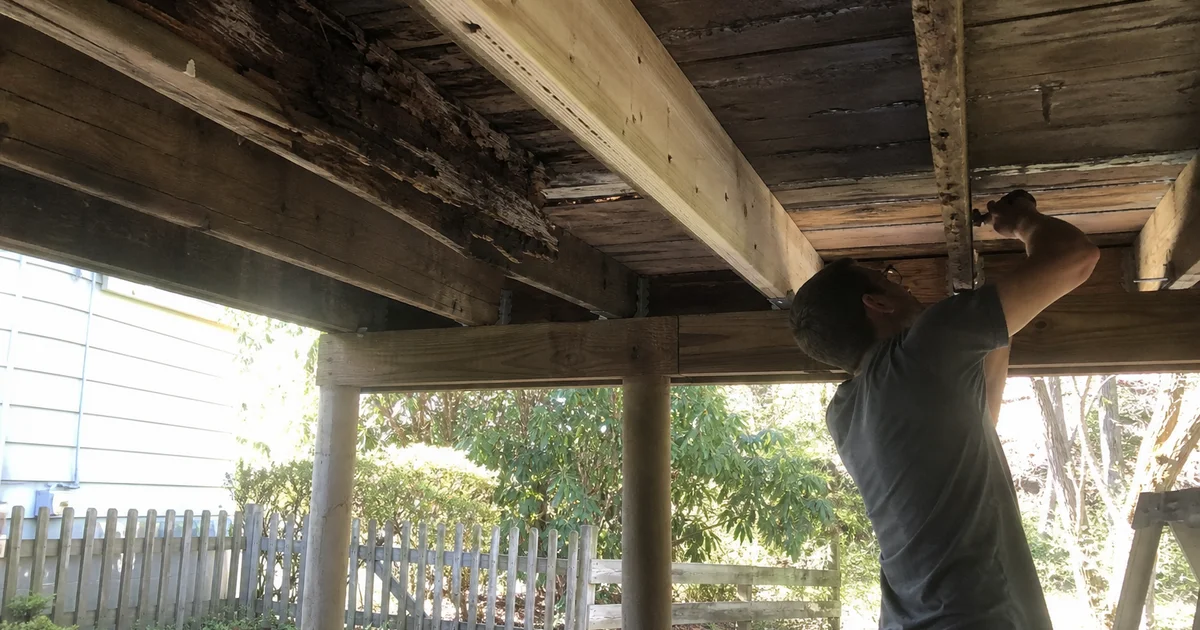
We see it every spring when homeowners call asking about deck rot repair.
Water damage quietly compromises the safety of beautiful backyard builds across the country. According to 2026 findings from the North American Deck and Railing Association, the US currently has over 40 million decks older than 20 years. Our team knows that deck joist rot combined with age is a recipe for serious structural failure.
Let’s look at the data, what it actually tells us, and then explore a few practical ways to respond. The structural integrity of your home depends on catching these issues early.
Where deck rot usually starts
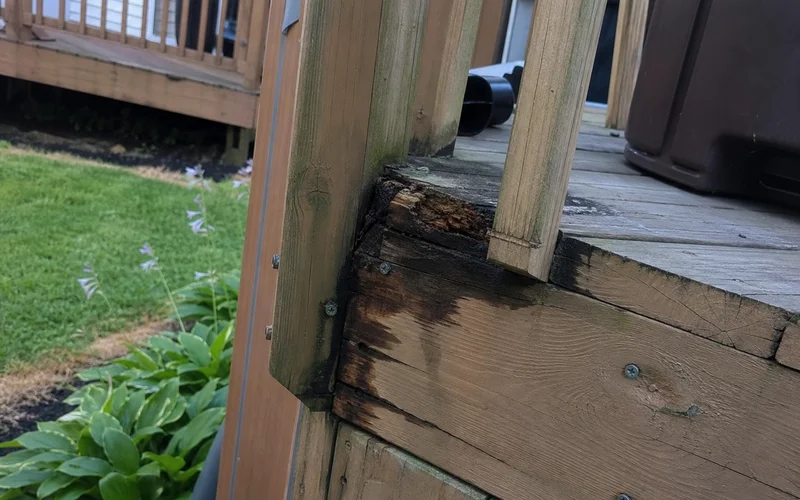
We always find that wood decay typically begins at the ledger board, board ends, joist tops, or post bases. These four critical zones trap moisture and cause the majority of structural failures.
Researchers at Virginia Tech actually noted that upwards of 90 percent of deck collapses stem from ledger board connection failures. Our experts see this directly when removing rotted deck boards in West Hartford.
The damage follows predictable patterns because water follows predictable patterns. Here are the four most common starting points for water damage.
- The ledger: Where the framework attaches to the house. Failed flashing lets water run behind the ledger into the rim joist of the house, rotting it from the back where you cannot see it.
- Board ends near the house: Snow and ice sit longest against the siding, keeping board ends wet for weeks.
- Joist tops: If boards are spaced too tightly, debris and water sit in the joint and rot the wood below.
- Post bases: Where a post meets a concrete pier, standing water around the base rots the wood from the ground up.
We highly recommend applying a butyl-based joist tape to prevent this top-down moisture damage. Products like Trex Protect offer a 25-year warranty to seal the wood from water that slips between the gaps.
A simple roll of tape costs around $25 and adds decades to your framework. Our specialized team handles all four of these trouble areas with different approaches depending on the extent of the damage.
You can learn more about how to address these specific structural issues through the carpentry side of our deck service. Identifying the exact source of the leak is the critical first step before any tools come out.
The repair techniques
We use different repair methods depending on the exact location and severity of the wood decay. The most critical distinction is knowing when to replace a part versus when to reinforce it.
| Problem Area | Recommended Professional Fix | Data-Backed Context |
|---|---|---|
| Rotted deck boards | Replace individual boards. If 30% or more are affected, replace all. | The 30% threshold usually indicates systemic moisture failure. |
| Rotted joist | Sister a new joist alongside the old one. | GRK or SDS structural screws provide superior shear strength over nails. |
| Rotted ledger | Cut back to solid wood, install proper flashing, and replace. | Virginia Tech studies show 90% of deck collapses start here. |
| Rotted post base | Replace the post and add a galvanized standoff bracket. | Isolates the untreated end-grain from wet concrete surfaces. |
| Rotted rim joist | Rebuild the section entirely. | Often requires temporary shoring to maintain load capacity. |
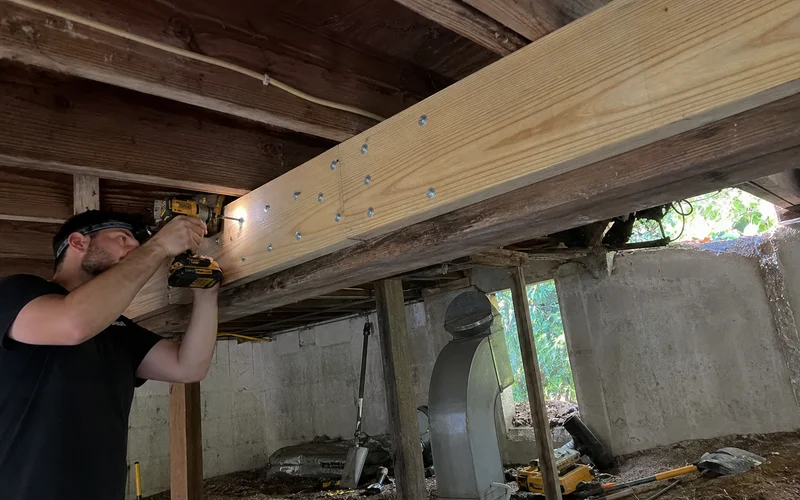
Adding new support is the most common joist repair strategy in the residential construction industry. Our preferred method involves taking a matching pressure-treated 2x8 or 2x10, cutting it to length, and fastening it alongside the damaged piece.
You secure the new piece using galvanized structural screws every 12 to 16 inches. Modern fasteners like GRK RSS or Simpson Strong-Tie SDS screws have incredible shear strength and do not require pre-drilling.
We rely on these structural screws because they dramatically outperform traditional carriage bolts or nails in sheer tests. The new joist carries the load, and the old one comes along for the ride. Done well, this approach is every bit as strong as a full framing replacement for a fraction of the cost.
Fastener Upgrades and Sistering Basics
Our crews always reference a basic framework when deciding how to tackle a job. Using standard drywall or deck screws for sistering is a common DIY mistake that leads to shear failure.
A 2026 structural engineering test demonstrated that modern structural wood screws completely eliminate the need for traditional through-bolting. We always upgrade the hardware when sistering deck joists.
The 3-inch or 4-inch self-tapping fasteners pull the new lumber tightly together to provide maximum clamping force. Make sure to crown the new joist up so it matches the existing floor height perfectly.
Structural vs. cosmetic rot
Our estimators always start a consultation by determining if the damage is cosmetic or structural. Not all rot requires a massive framing overhaul.
- Cosmetic Rot: Surface-level decay that affects a small area without compromising the load-bearing capacity of the board.
- Structural Rot: Softness through the full depth of a joist, ledger, or post that compromises the safety of the framework.
We test for minor soft spots using a quick scratch awl to check the depth. If the softness does not go through the full depth of the wood, the area can often be sanded and treated with an epoxy hardener.
High-quality restoration products like the Abatron LiquidWood and WoodEpox kit cost about $50 at Lowe’s and carry a GREENGUARD certification for low VOCs. Our carpenters have successfully used this exact two-part epoxy to restore minor water damage on non-structural pieces.
Deep structural decay requires immediate replacement or sistering because the wood can no longer safely carry a load. Understanding the difference between these two issues will help you make a better decision.
We make distinguishing between these two types of damage the absolute priority during a walkthrough. If you are already certain your structure has significant decay, the next major question is whether to repair or replace it.
You can review our deck repair vs. rebuild guide for the specific warning signs that push the decision toward a complete rebuild.
Our goal is to provide a safe, beautiful outdoor space for your family. Professional deck rot repair is a serious project that requires careful attention to detail and a solid understanding of load-bearing structures. Contact a licensed professional immediately if you suspect your framing is compromised.