Fall Home Maintenance Checklist for Connecticut Homeowners
A Connecticut fall checklist: gutters, roof and siding, deck sealing, door and window drafts, and wood-rot inspection before winter sets in.
The Connecticut fall checklist
Every year, the shift from autumn leaves to freezing nights catches someone off guard. Many property owners overlook the narrow window between peak leaf drop and that first hard freeze in late October.
Our crews at Handy Man West Hartford consider this brief period the most critical time to execute the fall home maintenance checklist connecticut properties require. This guide ranks tasks by the actual financial consequence of skipping them.
The window closes quickly once temperatures drop.
We designed this priority list to highlight the exact repairs that prevent major winter disasters.
Priority 1: must do
Focusing on the absolute highest risk items protects your largest investment. You must clean gutters, inspect the roof, and check for wood rot before November to complete your ct home winterization.
Our team sees countless examples of neglected gutters causing massive winter bills. A clogged downspout guarantees ice dams will form during freezing weather. 2026 insurance data shows the average water damage claim from a frozen pipe or ice dam now exceeds $30,000.
We highly recommend preventing this through proactive clearing. Professional steam removal for an existing ice dam currently costs between $650 and $2,400. That makes a simple autumn cleaning an incredibly high return on investment.
Our routine gutter cleaning strategy prevents water from pushing under your roofing shingles. A quick visual inspection of roof flashing around chimneys can spot lifted edges before snow hits.
We suggest probing exterior window trim with a screwdriver to catch soft rotting wood early. Small trim repairs in October cost a fraction of structural rebuilding in April.
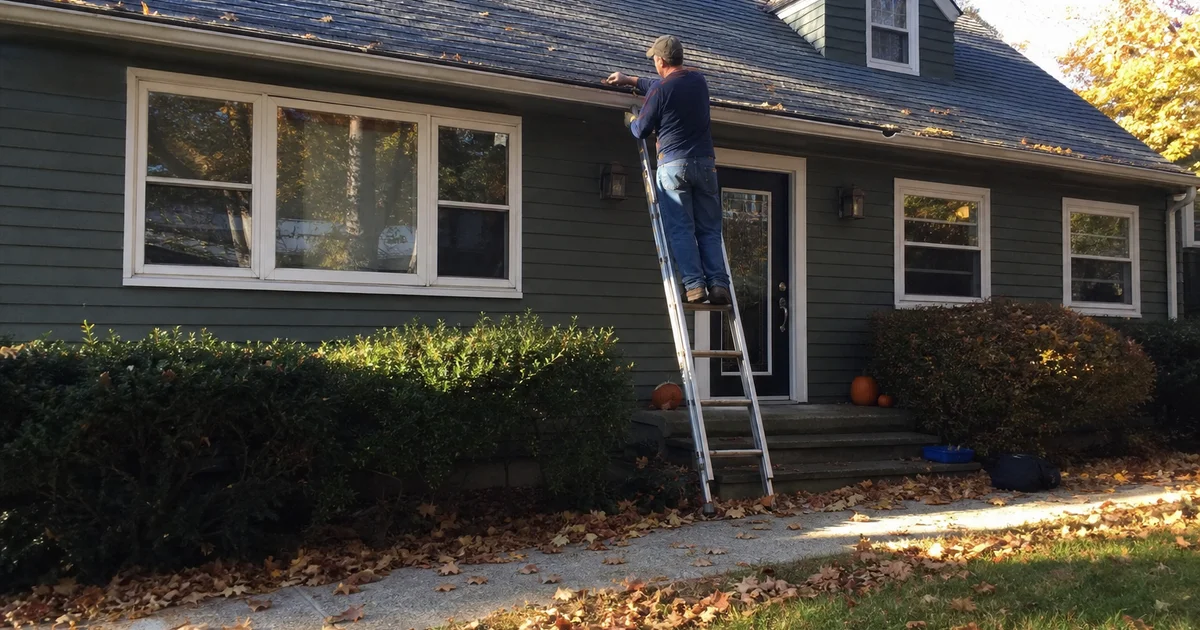
- Clean gutters and check downspouts: This is the single most important item. Fall clogs cause winter ice dams, which lead to expensive roof and wall damage. See our gutter cleaning frequency guide for detail.
- Inspect roof and flashing: Check from the ground with binoculars if you are not comfortable climbing. Look for missing shingles, curled edges, and any lifted flashing at chimneys or vent stacks.
- Wood rot check on exterior trim: Probe soft spots with a screwdriver. Small trim repairs in October prevent structural jobs in April.
Priority 2: should do
Secondary maintenance tasks focus on sealing the building envelope against cold air and moisture. You should seal decks, replace weatherstripping, caulk joints, and extend downspouts before the snow flies.
Our professionals rely on Class 25 movement-rated sealants like OSI Quad Max or GE Pro Seal Max for late-season caulking. Standard latex caulk fails and shrinks if applied when temperatures dip below 40 degrees Fahrenheit. A flexible high-performance product cures properly in freezing conditions and stops water entry.
We always tell clients to check downspouts to ensure water drains far from the foundation. Wet soil around a house expands when frozen and causes frost heave. This repeated pressure cracks foundation walls over time.
Our deck sealing projects are typically scheduled between late September and mid-October. Two years without a fresh sealer leaves wood completely vulnerable to splitting. Dry autumn days provide the exact curing environment sealants require.
- Deck cleaning and sealing: Get this done if your deck has not been sealed in two or more years and you have dry weather. Late September through mid-October is ideal.
- Weatherstripping on exterior doors: Check for compressed or cracked seals. Fresh weatherstripping stops winter drafts and saves significantly on heating costs.
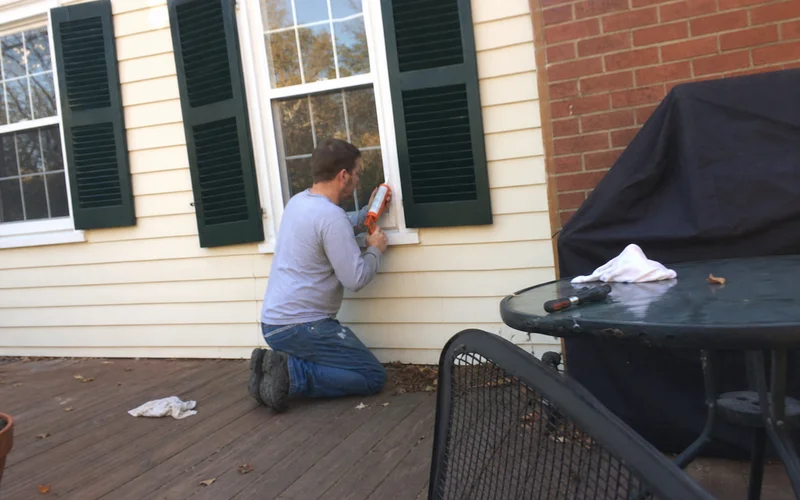
- Caulk exterior joints: Inspect trim-to-siding seams, window casings, and door frames. Any joint where paint is separating or caulk has cracked is a prime water entry point.
- Downspout extensions: Make sure water leaves the foundation completely. Add splash blocks or extensions if any downspout dumps water directly at the wall.
Priority 3: good to do
Comfort and efficiency upgrades round out your autumn preparations. Getting your heating system serviced and adding storm doors will make a brutal winter much more tolerable.
Our technicians strongly advise preparing for the 2025-2026 Farmers’ Almanac prediction of a “Chill, Snow, Repeat” winter in New England. Severe temperature swings and heavy storms will push your HVAC system to its absolute limit. Proactive servicing ensures you will not be left freezing during a January breakdown.
We also remind property owners to insulate attached garage doors to boost their thermal resistance. This simple weatherstripping step adds real R-value. It keeps cold air from seeping into adjacent living spaces.
Our comprehensive seasonal exterior maintenance service actually covers items in Priority 1 and 2 in a single visit. Getting these done simultaneously saves money and guarantees a secure home. Scheduling ahead beats waiting for emergency winter service.
- Chimney sweep and inspection: Schedule this before your first use if you rely on a wood-burning fireplace or stove.
- Heating system service: Book an appointment with your HVAC contractor well before you actually need heat.
- Interior storm doors: Install these to create a second thermal boundary on your entry doors.
- Weatherstrip garage door: People often overlook this step, but it adds substantial R-value to attached garages.
Why the fall timing matters so much
Timing dictates the success of nearly every exterior repair. Fall offers the final dry, moderate weather window before freezing temperatures halt exterior curing processes.
Our state experiences aggressive freeze-thaw cycling that destroys building materials. Water expands by exactly 9 percent when it turns to ice. This expansion creates massive hydrostatic pressure inside small cracks.
We see the worst damage occur during the March “false spring” when temperatures can swing 30 degrees in a single day. Snow melts into joints during the afternoon and then freezes solid overnight. A gap that is properly caulked in October remains dry and protected.
Our experience shows that water trapped in a November joint will freeze more than 30 times before April. Every single freeze wedges a microscopic ice molecule deeper into the wood or envelope. This process turns a minor hairline crack into full-blown wood rot by springtime.
We urge immediate action because temperature limits dictate what products actually work. Paint refuses to adhere and standard caulks fail to cure once temperatures consistently drop below 40 degrees Fahrenheit. Missing the November deadline means you are stuck waiting until spring for permanent repairs.
| Temperature Range | Impact on Home Exterior Materials |
|---|---|
| Above 40°F | Ideal conditions. Standard latex caulks cure properly, and exterior paint adheres tightly. |
| 32°F to 40°F | Curing slows dramatically. Standard paints fail to bond, leaving surfaces vulnerable. |
| Below 32°F | Freezing occurs. Water trapped in unsealed joints expands by 9 percent, splitting wood. |
Bundle to save
Grouping multiple trades into one visit is the smartest way to manage a fall home checklist efficiently. A bundled half-day appointment eliminates multiple trip fees and finishes your fall prep immediately.
Our crews schedule multi-trade visits regularly across West Hartford and the Farmington Valley. A single visit typically covers gutter clearing, caulk touch-ups, door weatherstripping, and a wood-rot spot check. Homeowners save significant money compared to hiring separate specialists for each small task.
We highly recommend adding a few indoor inspections to your exterior appointment to fully prepare home for winter connecticut weather brings. Tightening interior door hinges prevents dragging when winter heating causes humidity changes. Checking the basement for moisture intrusion is another critical step before the ground freezes.
Our technicians can easily perform these spot-checks while finishing up outside. Catching a small foundation leak now saves you from a flooded lower level in January. To learn exactly what to watch for regarding exterior damage, read our guide on signs of wood rot on your home’s exterior.
- Basement moisture check: Catch small foundation leaks before the ground freezes solid.
- Door hinge tightening: Prevent doors from dragging when winter heating alters indoor humidity.
- Draft assessment: Pinpoint cold air entry areas around main floor windows.
Completing this fall home maintenance checklist connecticut property owners need will give you total peace of mind. Give our office a call today to schedule your comprehensive autumn prep visit.