Repair vs. Replace: When a Door Is Beyond Fixing
Warping, rot, and failing hardware — the thresholds that mean replace, not repair, plus cost comparison and the energy payoff of a new door.
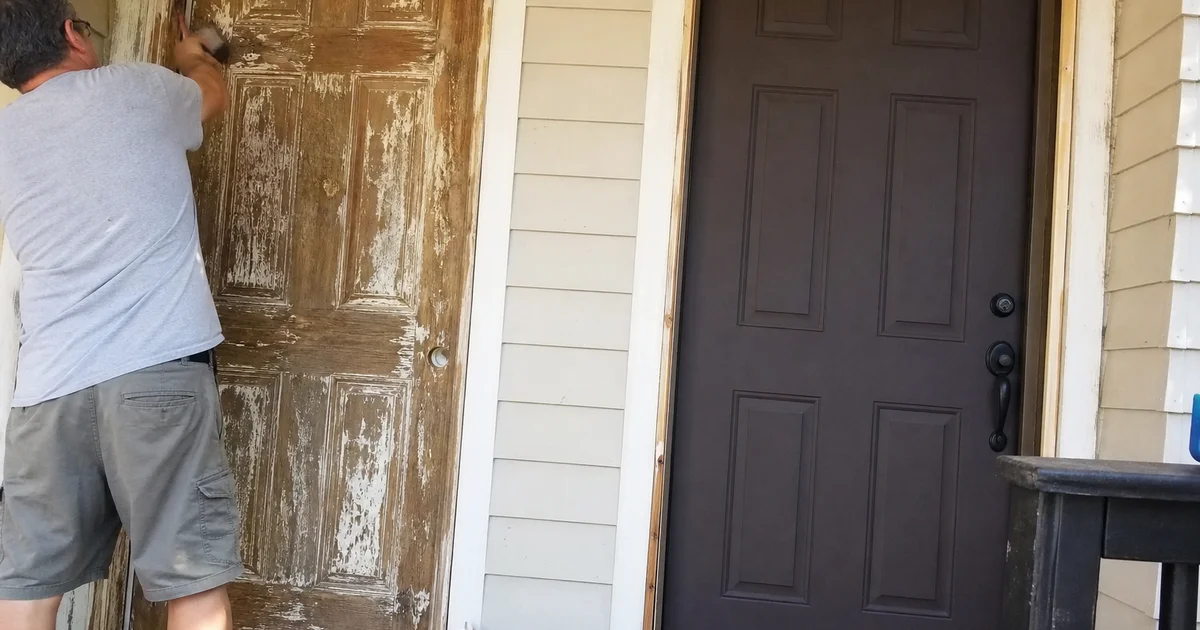
We see it all the time with local homeowners facing a drafty entrance. A sticking frame or a cold breeze immediately raises questions about whether to repair or replace door systems.
The U.S. Department of Energy notes that entry doors account for up to 20% of a typical home’s heat loss.
Our team wants to help you stop wasting money on temporary fixes. Let’s look at the exact signs of structural failure, review the latest cost data, and lay out a clear plan.
The four thresholds that mean replace
Replacement is the right call when a frame is severely warped, rotting at the base, delaminating, or constantly drafting. We know that these structural failures mean the unit itself is the problem. No amount of adjustment will save it at this stage.
Reviewing the following four thresholds helps clarify your next steps.
- The door is warped. Our preferred method for checking this involves holding a 4-foot level against the interior face. Any daylight underneath means you need a warped door replace strategy, as it will never seal against fresh weatherstripping. Common on older solid-wood models after a decade of humidity swings, this defect makes a tight fit impossible.
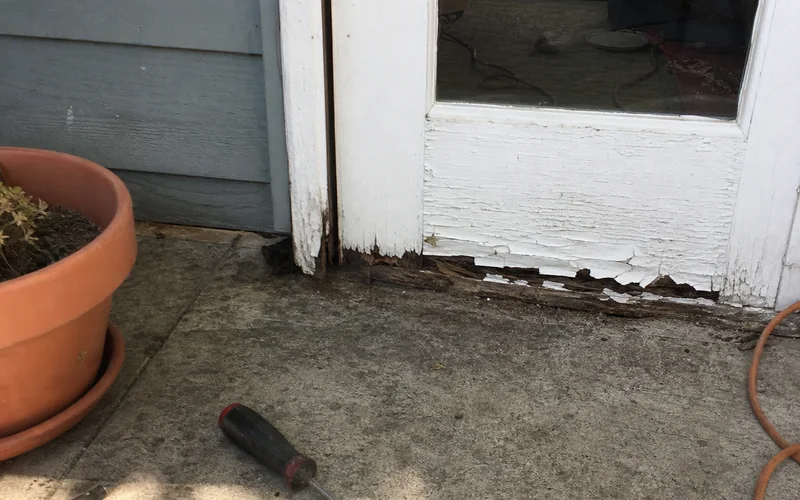
- The bottom rail is rotted. We consider softness at the bottom of an exterior unit to be completely unfixable. Water often sits on the threshold and ruins the sensitive wood fibers. Once the rail feels spongy, the entire structural integrity is compromised.
- Steel or fiberglass door has delaminated. Our technicians frequently see the outer skin separating from the foam core to create bubbles or soft spots. The insulation value completely vanishes even if the exterior looks intact. Leading brands like Therma-Tru use advanced adhesives to prevent this, but older models remain highly susceptible.
- You’ve done every repair and drafts continue. We warn clients that fresh weatherstripping and an aligned strike plate might not stop the chill. A tiny 1/8-inch gap under an exterior entrance lets in as much cold air as a 2.5-inch hole in your wall. That constant draft is a clear sign that the hardware has permanently failed.
Our door replacement service handles the swap start to finish.
Cost comparison: Repair or replace door
Very rough Connecticut numbers help clarify the financial breakdown. Interior door repairs usually win out on cost, but an exterior unit over 20 years old often requires a total swap.
Our team compiled these rough 2026 estimates for the U.S. market to show the real numbers. Comparing door repair vs replacement becomes much easier when you look at the data. The detailed table below outlines what you can expect to spend.
| Scope | Repair | Replacement |
|---|---|---|
| Interior door, hinge or latch fix | $125 to $250 | $200 to $450 (labor and door) |
| Interior door, full replacement | Rare | $250 to $550 |
| Exterior door, weatherstripping or sweep | $150 to $350 | Not applicable |
| Exterior door, draft fixes | $200 to $450 | $1,000 to $2,500 (labor and door) |
| Exterior door, full replacement | Rare | $1,200 to $3,500+ |
We constantly remind clients that weatherstripping and hardware fixes are cheap and highly effective. The 2025 Cost vs. Value Report by Remodeling Magazine shows that a new steel entry door provides up to a 216% return on investment in certain regional markets. This incredible ROI makes an upgrade the smarter long-term financial decision once structural issues appear.
The energy payoff
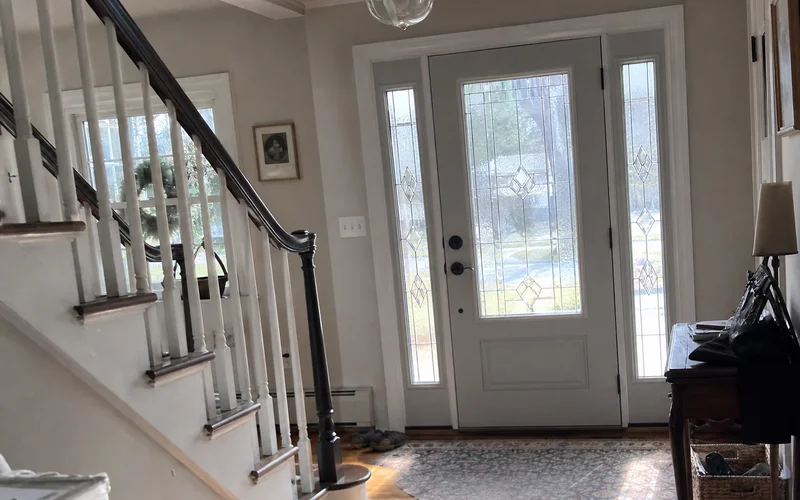
Our calculations show that a drafty exterior entrance leaks the equivalent of a small open window all winter. Replacing an old wood or lightly-insulated steel frame with a modern insulated fiberglass unit typically reduces heat loss by 60 to 75 percent. The transition from an R-value of 2 for older models to an R-value of 5+ yields massive efficiency gains.
We regularly see $80 to $150 per winter in heating savings on an average Connecticut home. Premium manufacturers like ProVia now offer high-density polyurethane foam cores that drastically outperform traditional wood. Payback on a $1,500 installed mid-tier fiberglass unit is typically 8 to 12 years just from energy savings.
Our customers also love the immediate comfort of having no drafts and no cold spots at the entry. Add the substantial security and appearance improvements, and the financial case becomes incredibly strong. Upgrading transforms a vulnerable access point into a rock-solid barrier against the elements.
When simple repair is genuinely enough
We highly recommend minor adjustments for most interior rooms and for exterior units under 15 years old with intact skins. Fresh materials like Q-Lon weatherstripping or a heavy-duty Burrtec sweep will easily extend the lifespan. A properly adjusted frame will last another 5 to 10 years cleanly and affordably.
Our technicians frequently realign Schlage and Kwikset strike plates to fix latching problems instantly. If you are seeing drafts, start with our how to fix a drafty exterior door guide before considering a massive project. Knowing exactly when to replace a door saves you from making an unnecessary purchase.
We are always ready to evaluate your situation and give you an honest recommendation. Choosing the right path for your specific home does not have to be stressful. Contact the shop today to schedule an inspection and secure your property for the upcoming season.