Prehung vs. Slab Doors: Which to Choose
Prehung or slab? Compare install ease and cost, when each fits, frame condition, and fit-and-finish trade-offs before your door project.
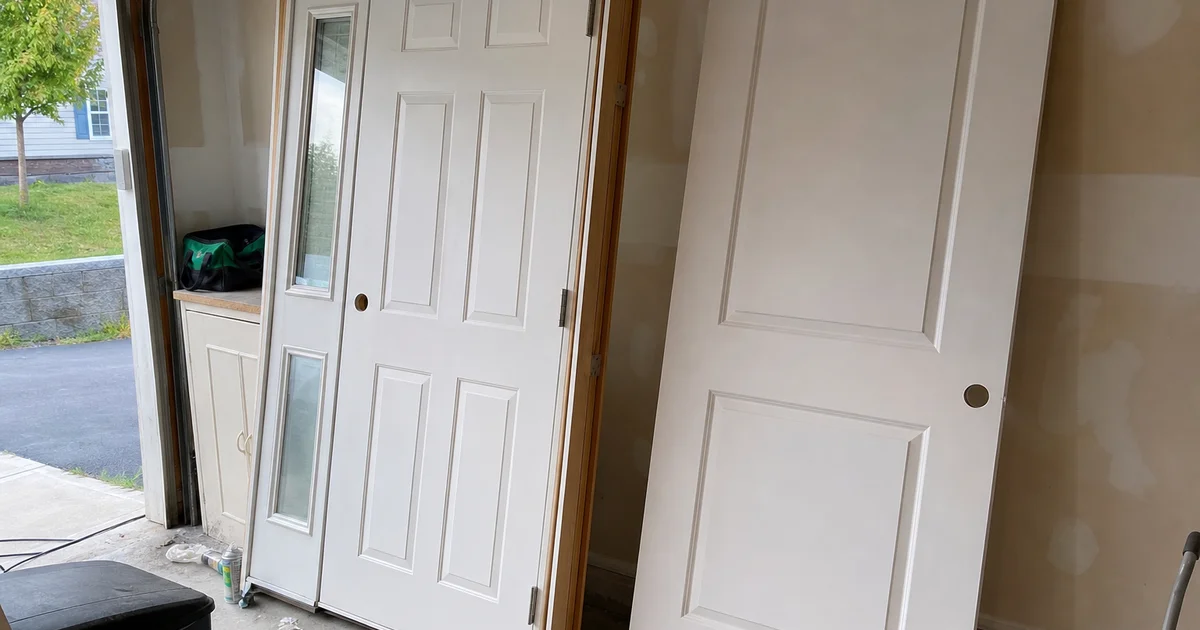
Our team sees a lot of confusion around the prehung vs slab door debate during home renovations. This slab door vs prehung choice often catches homeowners off guard.
Many people assume buying just the door panel will automatically save money.
We find that the installation reality is completely different. Understanding which door type to buy depends entirely on the condition of your existing frame. Let’s look at what each option actually includes, the cost differences we are seeing in 2026, and a simple framework to help you decide.
What each actually is
A slab door is simply the door leaf itself without any framing attached. A prehung door includes the door leaf already attached to a matching frame with pre-installed hinges. Our door installation side of our work covers both approaches, but they represent very different jobs with distinct price points.
These two styles serve specific framing situations in US homes. You install a slab into an existing frame by transferring hardware from the old door. This often involves cutting new hinge mortises and drilling a standard 2-1/8 inch latch bore.
We recommend comparing the core components of each type before making a purchase. The prehung unit arrives ready to drop into a rough wall opening. Installers shim the frame plumb and level, apply foam insulation behind the jambs, and finish it with trim.
Here is a quick breakdown of what each unit typically includes:
- Slab doors: Provide just the panel, though pre-bored options are common.
- Prehung units: Include the door, hinges, a strike plate location, and a frame.
- Standard jambs: Prehung interior frames usually feature a 4-9/16 inch depth to match standard US 2x4 framing.
- Custom fitting: A prehung door is already perfectly fit to its own frame at the factory.
When prehung is the right call
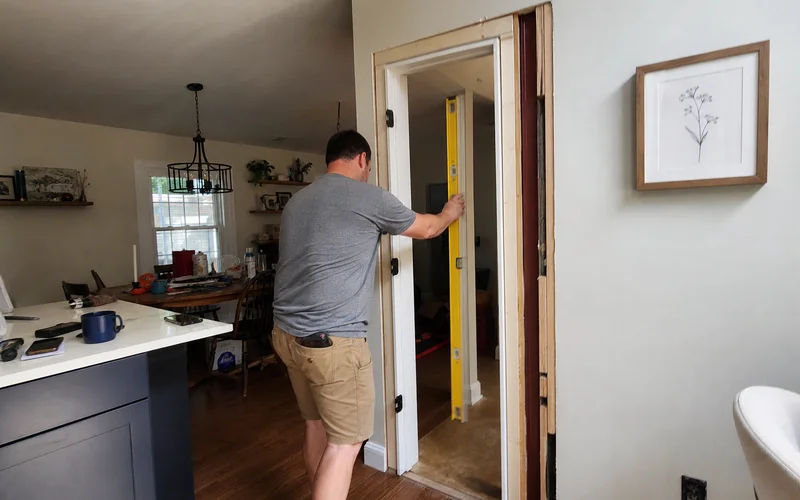
Prehung is the correct choice when your existing frame is compromised or you are replacing an exterior entry. You get a fully sealed system that prevents drafts and functional issues right out of the gate. Our experience shows that installing a bare panel in a bad frame guarantees a door that will never close properly.
Contractors always evaluate the wall condition first to see if a prehung unit is necessary. Old, out-of-square, or rotted frames frequently plague exterior doors. A factory-assembled unit can easily save a contractor or DIYer one to two hours of labor compared to routing new mortises.
The weatherproofing, threshold, and frame integrity all matter heavily for a front door that has to seal against harsh Connecticut weather. Here is exactly when a prehung door install wins out:
- Compromised frames: The wall around the door has settled, or the bottom is rotted.
- Exterior replacements: Factory-sealed frames block out moisture and cold air.
- Custom openings: The unit is fit to its frame at the factory, eliminating tricky adjustments.
- Speed and cleanliness: A full unit replacement drops right in without exact hinge matching.
Cost is the main downside to this approach. We see typical 2026 US retail prices for prehung interior doors starting around $150 to $300, while exterior models easily exceed $500. Installing a prehung door also requires opening up and replacing your interior trim.
When slab is the smart choice
A slab is the smart choice if your existing frame is completely square, plumb, and free of damage. This option lets you update the style of the door without ripping out the surrounding trim. Our team often recommends this route for newer homes where the framing remains structurally perfect.
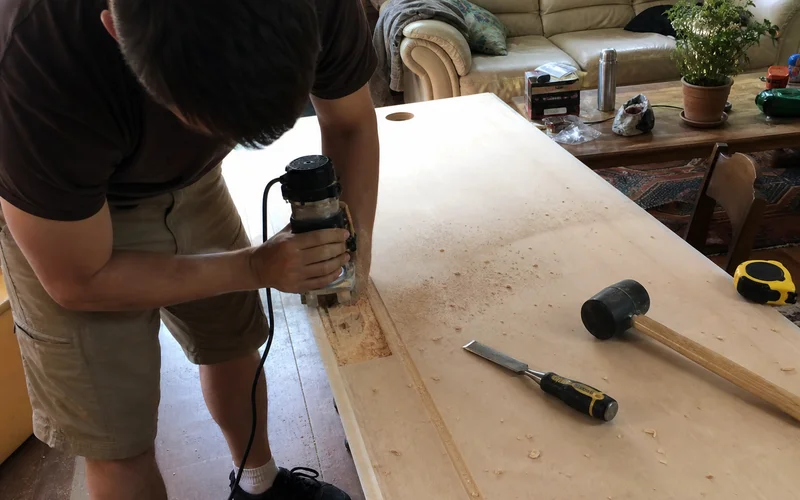
Swapping a bare panel requires exact-match hinge placement and latch bore location. You must carefully copy the layout from the old door and account for any bevel on the strike edge. We use specialized equipment like a Milescraft HingeJig or Kreg routing template to cut precise mortises for standard 3-1/2 inch hinges.
This precise carpentry can be finicky for beginners. A competent professional can finish a slab swap in about 45 minutes per door.
Consider a slab door in these specific situations:
- Sound framing: Most interior door frames in West Hartford homes fit this description if the house is under 40 years old.
- Preserving trim: You want to swap a hollow-core to a solid-core, or a flush to a six-panel, without pulling casing.
- Tight budgets: Slab doors are cheaper, with basic interior hollow-core models starting around $75 at most US home centers in 2026.
- Labor savings: Straightforward installs can keep professional labor costs modest.
Rough decision framework
Your decision framework should prioritize prehung units for exterior use and slabs for intact interior frames. This simple rule prevents water damage on outside walls and saves unnecessary trim work inside. Our installers always check the rough opening dimensions before finalizing a product order.
For a new exterior entrance, almost always go with a prehung unit. A standard US front door measures 36 by 80 inches, and a factory-sealed frame is vital for proper weather resistance. We highly recommend prehung units for any first-time DIYer. The fully assembled frame is much more forgiving. This ease of installation easily justifies the higher initial purchase price.
Here is a quick summary for planning your project:
| Project Type | Best Door Choice | Primary Reason |
|---|---|---|
| New Exterior Door | Prehung | Maximum weatherproofing and security. |
| Interior Door (Good Frame) | Slab | Saves money and preserves existing trim. |
| Interior Door (Bad Frame) | Prehung | Fixes out-of-square issues instantly. |
| First-Time DIY Install | Prehung | Avoids complex hinge routing and measuring. |
If you are weighing interior versus exterior door replacements more broadly, our interior vs. exterior door replacement guide covers the bigger picture. Review that guide today to plan your next home improvement step.