Patching a Hole in Drywall: What the Job Involves
How drywall patching works by hole size — mud, tape, sand, feather, and texture matching for a paint-ready, invisible repair.
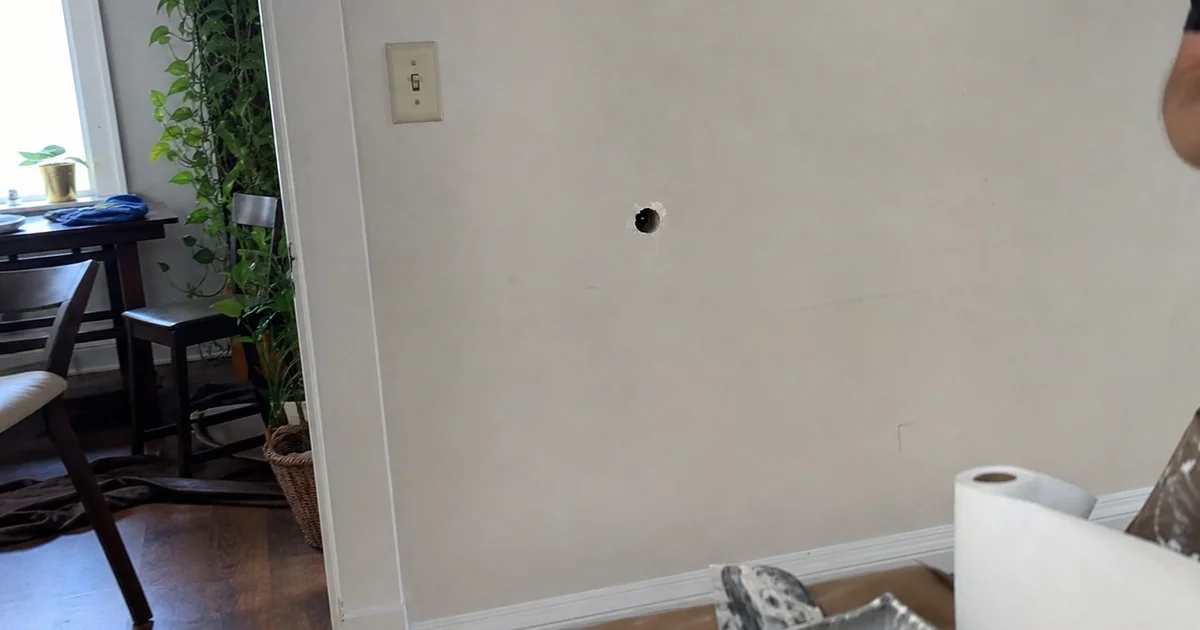
We see a lot of damaged walls across West Hartford. The most frequent requests usually start with a rogue doorknob or a plumbing leak. Trying to fix hole in drywall sections with a rushed weekend patch often looks worse than the original dent.
Our team relies on specific techniques and materials to get a smooth, flat finish.
Let’s walk through the exact methods required to make that damage disappear completely.
Patch method by hole size
The approach depends entirely on the hole size and its location. You need to match the repair technique to the extent of the damage to prevent future cracking.
| Hole size | Method |
|---|---|
| Nail hole to dime-size | Spackle, sand, prime, paint |
| Quarter to golf ball | Mesh drywall patch, joint compound in 2 coats |
| Golf ball to fist | Aluminum backing patch or self-adhesive mesh + mud in 3 coats |
| Larger than fist | Cut-in patch, square out the hole, backing strip, new drywall piece, tape all seams |
| Full sheet damage | Replace the whole sheet |
Handling Minor vs. Major Damage
Our crew fixes small dents and nail pops in about 15 minutes total across two quick visits. This timeframe covers filling the spot, letting it dry, sanding, and priming. Anything doorknob-sized or larger requires proper tape and joint compound feathered wide to blend in.
We often suggest homeowners use the 3M FPP-KIT for minor DIY repairs up to five inches wide. This kit features a metal plate to prevent spackle from sagging. Data from HomeGuide in 2026 shows average US professional repairs cost $300 to $900. Handling a single tiny dent yourself saves money, but larger sections require professional feathering to repair wall hole damage correctly.
Our drywall patching service handles all damage sizes efficiently. Knocking out several repairs in a single visit remains the most cost-effective way to book a drywall patch process.
The steps that make a patch invisible
The technique that separates a rough repair from an invisible one comes down to patience and precision. Skipping steps guarantees the damaged spot will show through your final coat of paint.
Prep and Initial Taping
We follow a strict sequence to ensure the foundation of the patch drywall hole repair is completely solid. The first half of the process focuses on structural integrity:
- Cut clean edges: Square out larger damage with a utility knife to create clean borders.
- Install a backing strip: Secure a wood or drywall scrap behind holes larger than two inches.
- Apply the first coat: Lay a bed of USG Sheetrock All Purpose joint compound.
- Embed the tape: Press paper or mesh tape into the wet mud and feather the edges smooth.
Smoothing and Finishing
Our finishing work requires widening the repair area to trick the eye. The second half of the job focuses entirely on blending the surface:
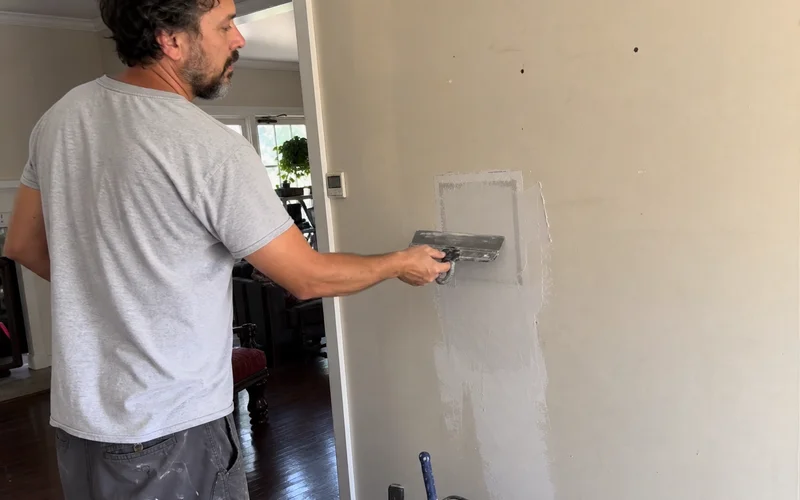
- Feather the second coat: Use a 10-inch knife to spread the mud six to eight inches past the tape.
- Sand smooth: Lightly buff the area between coats using 220-grit sandpaper.
- Apply a third coat: Skim the area with a lightweight mud like USG Plus 3 for an invisible finish.
- Match texture and paint: Spray the matching texture, apply a quality primer, and paint the wall.
Our technicians know that rushing the wide feathering step makes patches glaringly obvious. Time between coats matters immensely. Standard pre-mixed mud takes up to 24 hours to dry.
If you apply a second layer before the first is fully dry, the compound will crack. Pros often speed up the process by using a setting-type powder like Easy Sand 45.
This specific powder cures chemically in just 45 minutes to allow for faster recoating.
When a patch turns into a bigger repair
Sometimes a seemingly minor cosmetic issue hides a much larger structural problem. We frequently open up what looks like a simple dent and discover hidden complications inside the wall cavity. The scope immediately expands from a quick fix to a full diagnostic project when contractors encounter these three issues:
- Water damage: The gypsum core is soft, moldy, or crumbling to the touch.
- Hidden utilities: An electrical wire or plumbing pipe sits directly behind the hole.
- Failed previous repairs: An old DIY patch needs complete removal before rebuilding the area.
Our team approaches water-damaged drywall with extreme caution because it almost always indicates an active leak.
According to 2026 data from the Insurance Information Institute, about 1 in 60 insured US homes files a water damage claim annually, with plumbing leaks driving nearly 45% of these residential incidents.
Fixing soggy drywall without addressing the dripping pipe behind it guarantees hazardous mold growth within just a few days. We built our drywall repair vs. replacement guide to help you make the right call. This resource covers all the major decision points on when to patch and when to tear out the whole sheet.
Our repair specialists are ready to help if you find unexpected water damage or hidden electrical issues. Give our team a call today to schedule an inspection and get your walls fully restored.