How to Tell If a Drywall Crack Is Serious
Cosmetic or structural? How to read drywall cracks — settling vs moisture, warning signs, and when a wall crack means it's time to call a pro.
We see the same quiet panic from busy homeowners every week when a new fissure appears on a living room wall.
Handy Man West Hartford is dedicated to providing superior home repair and maintenance services that local residents can rely on. Our team has inspected hundreds of these fractures across the US, and the data tells a reassuring story about home settlement.
Figuring out if a drywall crack is serious does not have to be a guessing game. Most cracks in drywall are completely harmless, but catching the structural warnings early can save you thousands in foundation repairs. Let’s look at what the structural data is actually telling us, and explore a few practical ways to respond.
Cosmetic vs. structural: the differences
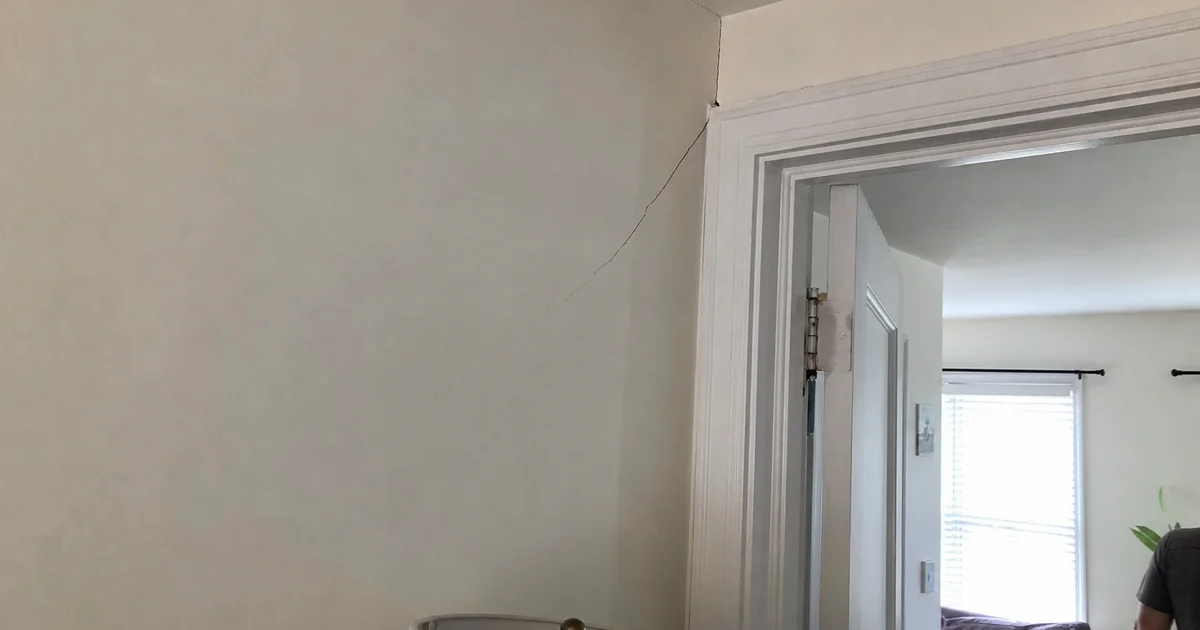
Most drywall damage in Connecticut homes, and throughout the US, is purely cosmetic. A hairline crack running from a doorway corner is the classic example of normal wear. This is caused by minor seasonal wood movement in the framing, and it is easily patched with standard tape and joint compound.
Our experience shows that new construction homes experience significant natural settling during their first one to three years. The underlying wood framing shrinks as it dries out. This shifts the walls slightly and creates visible stress lines in your paint.
Cosmetic cracks generally display these characteristics:
- Are thin (under 1/8 inch wide).
- Do not grow noticeably over time.
- Do not come back after proper patching.
- Are not accompanied by other symptoms (sticking doors, uneven floors).
Structural cracks are a completely different animal. They tell you the framing or foundation is moving in ways drywall alone cannot accommodate. According to the Foundation Repair Network, any gap wider than 3/16 of an inch is a major red flag for underlying foundation failure.
We always look for the following warning signs during an assessment.
- Cracks wider than 1/8 inch.
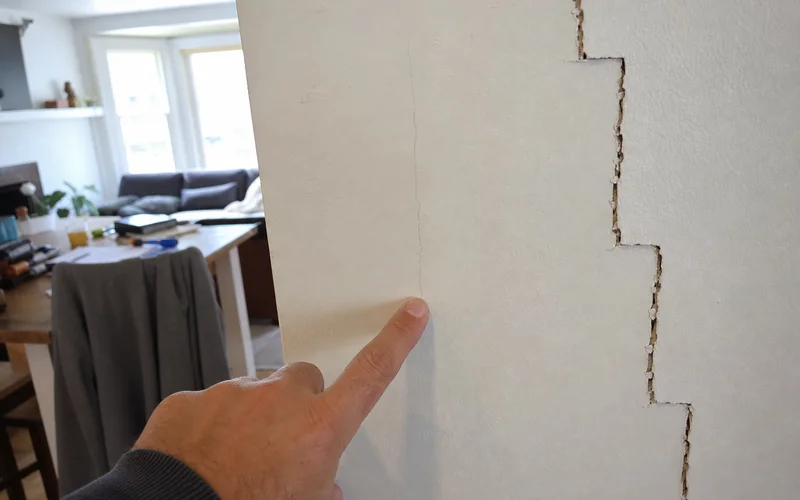
- Stair-step patterns following the drywall seams.
- Cracks that reopen after being patched.
- Doors and windows nearby that suddenly stick or will not close.
- Uneven floors in the same room.
- Cracks running horizontally along a wall.
The drywall repair side of our work handles cosmetic cracks routinely. For structural cases, you should hire an independent engineer first. Expansive clay soils, such as Bentonite, are common in the US and can cause violent soil expansion during wet seasons, cracking foundations and walls above.
Where cracks commonly appear
Specific architectural joints crack more often because they act as stress concentrators. These are locations where different materials meet or where the underlying framing changes direction.
Our repair crews frequently fix gaps in these highly susceptible areas.
- Above doors and windows: The header transitions and settles slightly over time.
- At ceiling-to-wall corners: Different framing planes meet and push against each other.
- Along drywall seams: Gaps appear if the seams were not taped properly during the initial installation.
- At the top of stairwells: These areas absorb significant mid-span structural stress.
Cold Weather and Truss Uplift
Many homeowners notice new ceiling gaps appearing exclusively during the winter months. Building Science Corporation defines this seasonal issue as “truss uplift,” a common occurrence in colder US climates.
Understanding these wall crack causes helps you know exactly what is happening behind the paint, preventing you from wasting money on surface-level patches.
We see this happen when the bottom chord of a roof truss stays warm under thick attic insulation, while the top chords get cold and damp. The top wood expands, the bottom wood shrinks, and the entire truss bows upward. This pulls the ceiling drywall right off the interior walls.
Fixing truss uplift with caulk is just a temporary bandage. The true solution involves floating the drywall corners or using specialty backing angles so the wood can move without tearing the plaster.
Nail Pops and Drywall Shifting
Small, circular bulges on your wall are called nail pops, and they often accompany drywall shifting. The wood framing shrinks as it ages, causing the drywall fastener to back out and push against the paint.
Our teams always remove the old fastener and secure the panel with two new drywall screws before applying a fresh coat of mud. Most of these location-based issues are cosmetic if the fracture stays hairline and does not grow. Watch the area for a few months before deciding whether to patch it or investigate further.
Is a drywall crack serious? When to call a pro
Knowing when to call a professional protects your investment and prevents minor issues from escalating into major hazards. Identifying a structural drywall crack early often dictates whether you need a simple patch or a massive foundation intervention.
Call our office directly for the following situations.
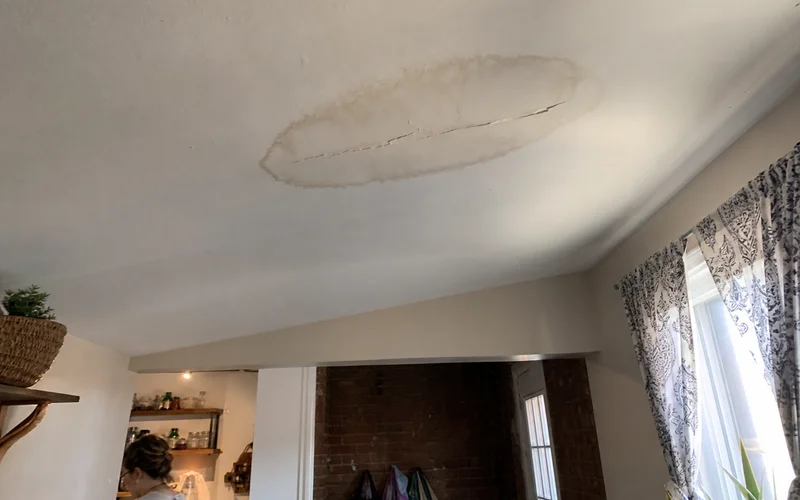
- Cracks accompanied by any water staining (this indicates an active leak, not just settling).
- Cracks that have been patched before and keep coming back.
- Widening cracks. Measure the width with a caliper or ruler, wait three months, and measure it again.
- Cracks with visible daylight or drywall separation behind them.
The Cost of a Structural Evaluation
For structural-looking damage, like stair-stepped patterns with doors sticking nearby, start with an independent structural engineer. They will assess the framing before you waste money on cosmetic patches that will not hold.
We always recommend hiring an independent engineer before calling a foundation repair company. A foundation repair sales team has a massive financial incentive to sell you expensive pier systems. An engineer simply charges for their time and provides an unbiased structural report.
Here is a breakdown of what you can expect to pay for a professional structural assessment in the US as of 2026.
| Home Size (Sq. Ft.) | Average Inspection Cost | What to Expect |
|---|---|---|
| Up to 1,500 | $500 to $750 | Basic interior and exterior visual inspection. |
| 1,500 to 2,500 | $750 to $1,250 | Full assessment including basement or crawl space access. |
| Over 2,500 | $1,250 to $2,000+ | Comprehensive report with specialized measurements for complex foundations. |
For everything else, patching these gaps properly and painting is a straightforward job. See our related drywall repair vs. replacement guide if you are wondering whether patching or replacing the section makes more sense for your specific project.
Taking prompt action ensures your house remains a safe, solid foundation for your family. Our team is always here to help you evaluate the next steps, so if you are still wondering, “is this drywall crack serious,” reach out today for a free visual assessment.