Signs Your Laminate Flooring Needs Repair or Replacement
Buckling, peaking, water damage, and worn planks — how to tell if your laminate floor can be repaired or needs replacing.
From what I’ve seen, identifying exactly when a floor crosses the line from a quick touch-up to a full replacement is one of the trickiest calls a homeowner has to make.
Assessing laminate floor damage correctly is usually the dividing line between saving money and throwing it away on doomed repairs. Our team encounters this specific dilemma daily across the US. Making the wrong choice often leads to paying for the same job twice.
We put together this breakdown to help you spot the true condition of your planks. Let’s look at the data, what it is actually telling us, and explore a few practical ways to respond.
The five warning signs
Laminate flooring gives you clear signals when it is failing. Watch for these specific indicators.
-
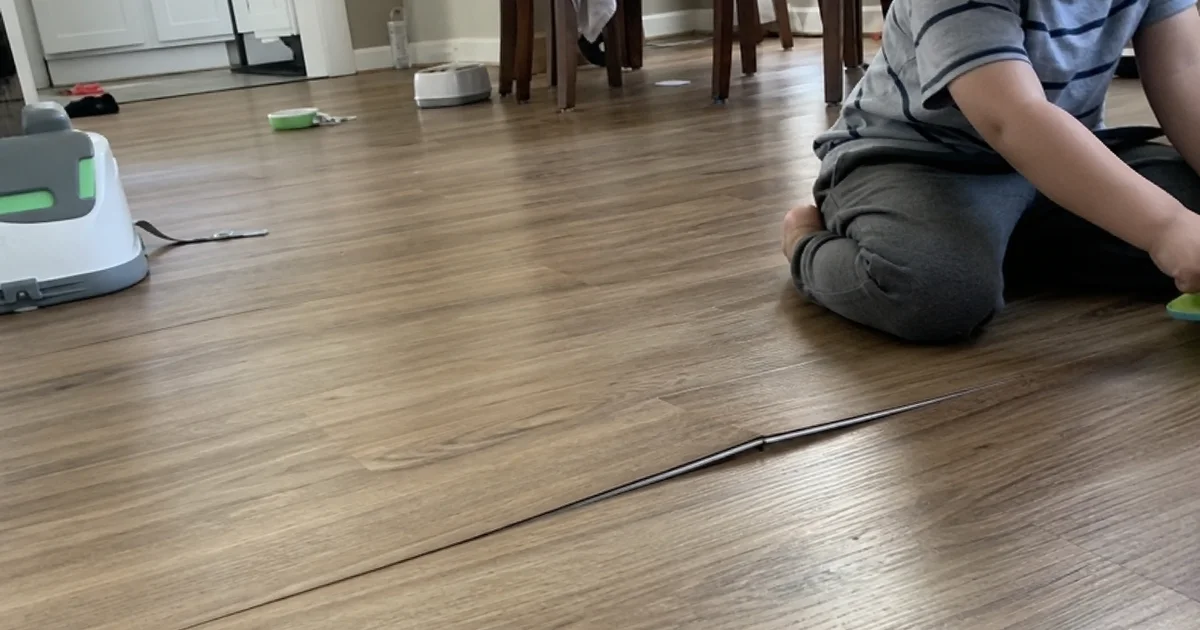
Buckling or peaking Where two planks lift at the seam and form a small ridge you can catch a toe on. Almost always caused by a missing expansion gap at the walls or moisture swelling the fiberboard core. We constantly see installations that skip the standard US requirement of a 3/8-inch expansion gap around the room perimeter. Without that crucial breathing room, changes in seasonal humidity force the planks to push against each other and buckle.
-
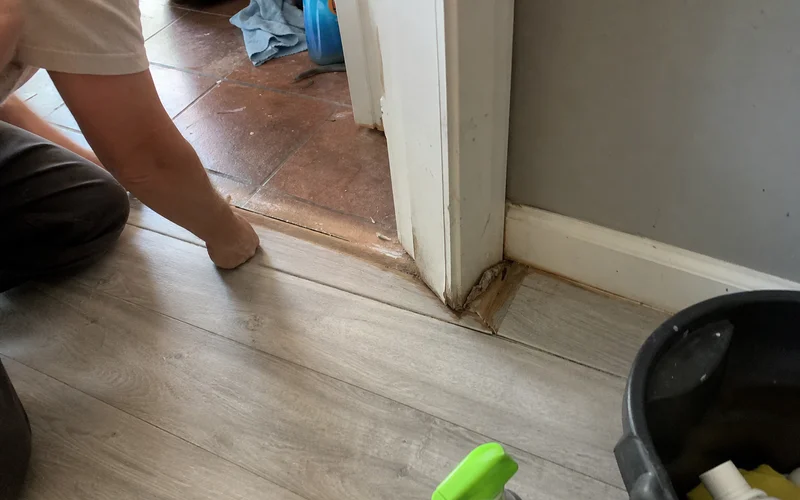
Water damage at edges Swollen or cupped edges near a dishwasher, sink, or exterior doorway quickly create a water damaged laminate floor. The high-density fiberboard (HDF) core absorbs water, expands, and cannot return to normal. Our technicians know that most standard laminate has a strict 24-hour window before standing water causes irreversible swelling.
-
Peaking at joints throughout the floor Small ridges appearing across many joints, not just one spot. Usually a moisture problem coming from below due to an absent vapor barrier or a wet subfloor. We frequently find this issue when an underlayment like a 6-mil polyethylene moisture barrier is left out over a concrete slab.
-
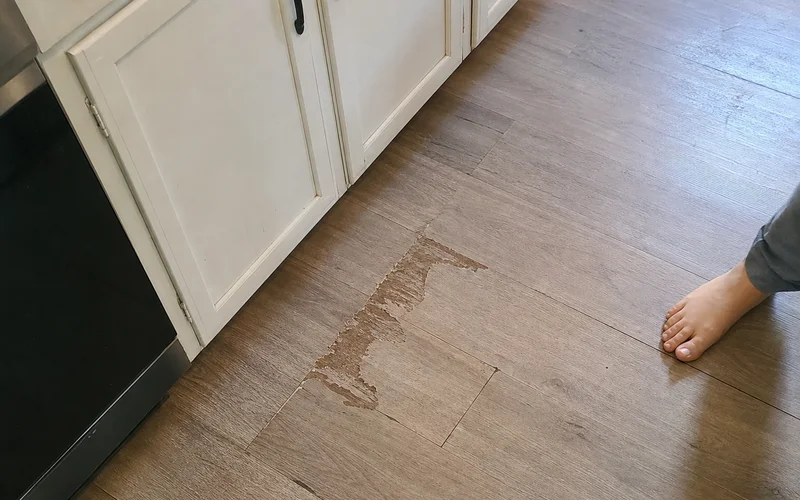
Worn, chipped, or faded planks High-traffic areas near doors, sinks, or under chairs on rollers show obvious wear. Cosmetic damage is highly visible and permanently removes the protective wear layer. Our replacement data shows that constant rolling chair friction without a protective mat degrades the top layer in under three years.
-
Soft or hollow-sounding spots Walk the floor and note any areas that flex more than the rest, or sound hollow when tapped. Usually indicates a subfloor problem below. A soft, spongy feel underfoot is a classic sign that the underlying oriented strand board (OSB) is beginning to rot or delaminate.
Our flooring repair service diagnoses which category your floor falls into and recommends the appropriate fix.
What’s repairable vs. what needs replacement
Knowing when to repair or when to replace laminate flooring prevents wasted money. We evaluate these situations using a strict set of criteria to ensure the most cost-effective path forward.
When a Repair Makes Sense
Targeted fixes work beautifully for localized issues. Our go-to strategy for minor damage often involves the “donor plank” method, taking a good board from a closet to replace a ruined one in the main room.
- Individual damaged planks: Swapping them out is easy if matching stock is available, even one or two per room.
- Buckling caused by missing expansion gap: You can trim baseboards, cut a proper 3/8-inch gap along the wall, and replace the shoe molding.
- Small water incidents: Swap the affected planks immediately before the HDF core expands to neighboring boards.
When to Choose Full Replacement
Major structural or age-related issues demand a fresh start. We strongly advise against layering new planks over old problems.
- The product line is discontinued: Matching stock does not exist, making an exact match impossible.
- Damage is widespread: More than 25 percent of planks across the room are affected.
- The subfloor has been compromised: Moisture requires structural work beneath the planks.
- The floor is aging out: The product is more than 15 years old and worn throughout.
A quick look at current 2026 data highlights why age and extent of damage dictate the best financial choice.
| Factor | Minor Repair Approach | Full Replacement Approach |
|---|---|---|
| Average US Cost | Low (Labor focused) | $3 to $8 per square foot |
| Expected Lifespan | Extends current floor life | Resets clock to 15-25 years |
| Best Use Case | Isolated scratches or minor edge swelling | Widespread peaking or missing moisture barriers |
The subfloor factor
If we spot buckling or hollow spots across multiple planks, the actual problem is often below the laminate.
A soft subfloor, like rotted plywood, failed OSB, or water damage from below, needs to be fixed before any new flooring goes down. Skipping this step and just installing new laminate on a compromised subfloor gives you the same problems within a year.
Our teams use professional-grade pinless moisture meters, like the Wagner Orion 940, to test the structural layers without drilling holes. A healthy OSB subfloor should hold fasteners tightly and feel completely solid.
Pro Tip: Never layer new waterproof flooring over a damp subfloor. The trapped moisture will delaminate the wood strands and void the manufacturer’s warranty on top brands like Mohawk or Pergo.
If water sits trapped in those compressed wood strands, the resins break down and the board loses its structural integrity. You will eventually notice the floor sagging or hear the fasteners squeaking as they pull loose.
For the decision framework on repair vs. replacement, see our repair vs. replace flooring guide.
Ready to have your floor walked? Request a call back and we’ll come out within the week.