Repair vs. Replace: Damaged Flooring Options
Should you spot-repair or replace a floor? Extent of damage, plank availability, cost comparison, and when full replacement is smarter.
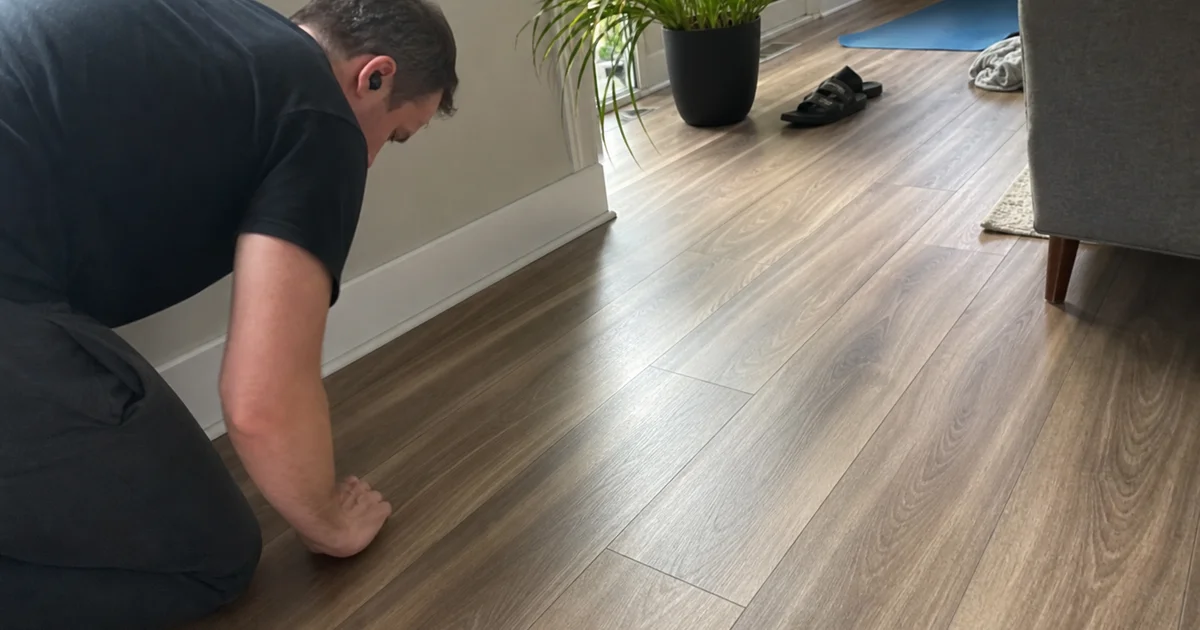
We constantly see homeowners struggling to decide whether to repair or replace flooring after noticing damage. A fast patch job might seem appealing, but underlying subfloor rot can quickly ruin that quick fix. The smartest approach involves weighing actual 2026 material costs against the expected lifespan of your current floor.
Our experts will walk you through the clear indicators for a localized fix, compare financial realities, and show you exactly how to handle discontinued materials.
When to spot-repair
Spot repair makes the most sense when the damage covers less than 15% of the room and you have identical replacement planks on hand. We recommend this targeted approach for isolated scratches or minor water damage near baseboards.
Spot repair is the right call when:
- Damage is limited to a few planks, typically under 10 to 15% of the room.
- Matching stock exists, meaning the same brand, product line, and color.
- The surrounding floor is sound, showing no widespread wear or fading.
- The subfloor is intact, containing no soft spots or water damage below.
- The plank in question can be lifted cleanly without damaging adjacent boards.
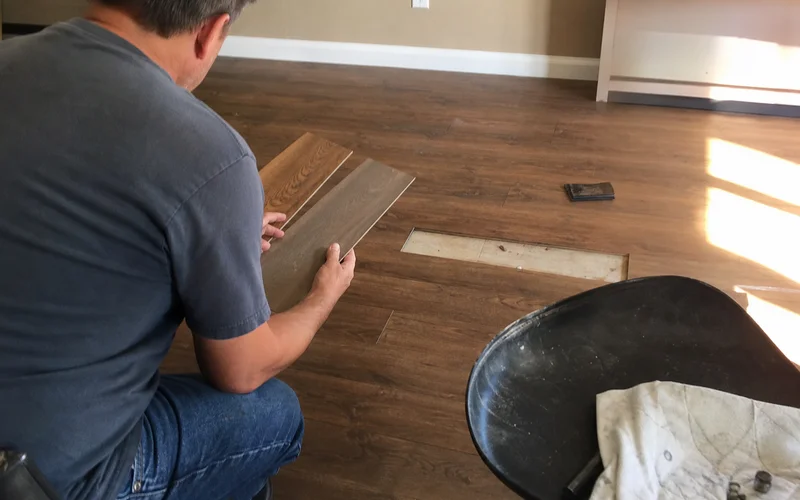
For a single damaged plank near the wall, spot repair usually takes 30 to 45 minutes and costs between $150 and $300 locally. Fixing a few planks in the middle of a room demands significantly more effort.
Our crews use an oscillating multi-tool to make clean plunge cuts right into the damaged plank. This precise cutting technique makes it easy to spot repair laminate without breaking the interlocking tongue-and-groove system of the surrounding boards.
Recent 2026 data shows that localized plank replacements typically range from $150 to $600 nationwide. Our flooring repair service handles both single-plank swaps and larger sectional repairs.
When replacement is smarter
Full replacement becomes the necessary choice when you need to replace damaged floor sections that exceed 25% of the room, or if your material is discontinued. We advise ripping out the old materials if widespread buckling indicates a serious subfloor moisture problem.
Full replacement wins when:
- Widespread damage affects 25 to 30% or more of the planks.
- Discontinued product lines mean matching stock is unavailable or costs a premium.
- Subfloor problems like soft spots, water damage, or unlevel areas require fixing.
- Aging throughout means the floor is over 15 years old and heavily worn.
- Wanting a style change drives the project, even if the existing product is fine.
A fresh installation often provides a strong financial return if you plan to sell. The National Association of Realtors reports in 2026 that replacing old flooring with Luxury Vinyl Plank yields a 65% to 80% return on investment.
Our clients who choose new hardwood installations see even better numbers, returning 70% to 80% of their costs. Standard laminate usually lasts 15 to 25 years before showing major wear.
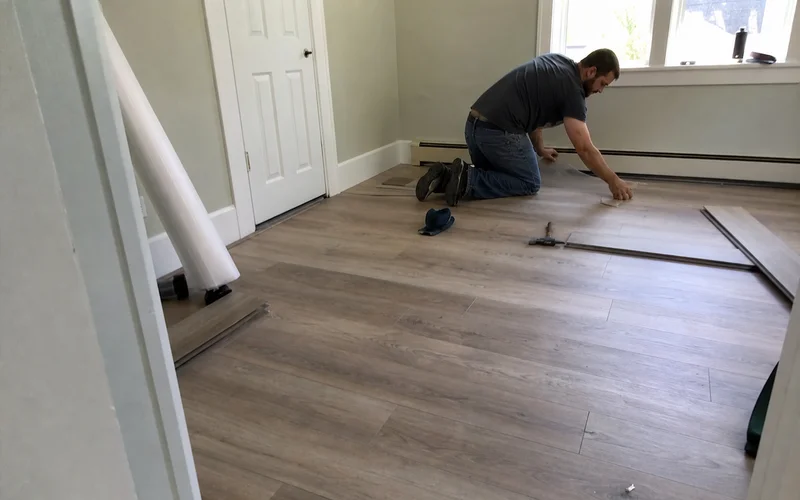
Full-room replacement takes one to three days depending on room size and includes proper subfloor prep, acclimation, and finish trim. We always make sure the subfloor is perfectly level before clicking any new planks into place.
Cost comparison
Comparing costs directly reveals that spot repairs are highly efficient for small issues, while full replacements offer better value for extensive damage. We drafted these estimates based on current Connecticut pricing to help you budget accurately.
Very rough numbers for a standard bedroom look like this:
| Scope | Cost |
|---|---|
| Single plank replacement | $150 to $300 |
| 5 to 10 plank spot repair | $400 to $900 |
| Section replacement (25% of room) | $700 to $1,400 |
| Full room replacement (200 sq ft) | $1,600 to $3,500 |
| Full room replacement + subfloor work | $2,000 to $4,500 |
A 2022 survey by the National Wood Flooring Association showed that adhering to a strict maintenance schedule extends floor lifespan by up to 10 years, saving thousands over time. Spot repair only makes sense in the smaller categories.
We advise that once you face a section replacement without reliable matching material, full room replacement simplifies the math and guarantees a durable result.
The plank-availability trap
The biggest obstacle to a cheap fix is discovering your specific flooring line is no longer manufactured. We see homeowners waste weeks hunting for obsolete planks that end up costing more than brand-new materials.
This trap usually unfolds in three stages:
- The original line is retired: Manufacturers frequently discontinue specific laminate designs and AC-rated lines every three to five years.
- Resellers inflate prices: Supply of a matching plank might exist online, but vendors often charge three to four times the original per-plank price.
- The math flips: The total expense of a spot repair using premium-priced planks quickly exceeds the cost of a modern mid-tier product.
Our team calculates that starting fresh often saves you money and stress in these situations. If your floor is more than eight to ten years old, check whether the exact product is still in production before assuming spot repair is cheaper.
Replacement usually wins on total cost if the manufacturer no longer makes your specific color and plank width. We encourage you to review our laminate installation guide for a complete walkthrough of the full installation process.
Give our office a call today to schedule a fast, transparent estimate to repair or replace flooring in your home.